
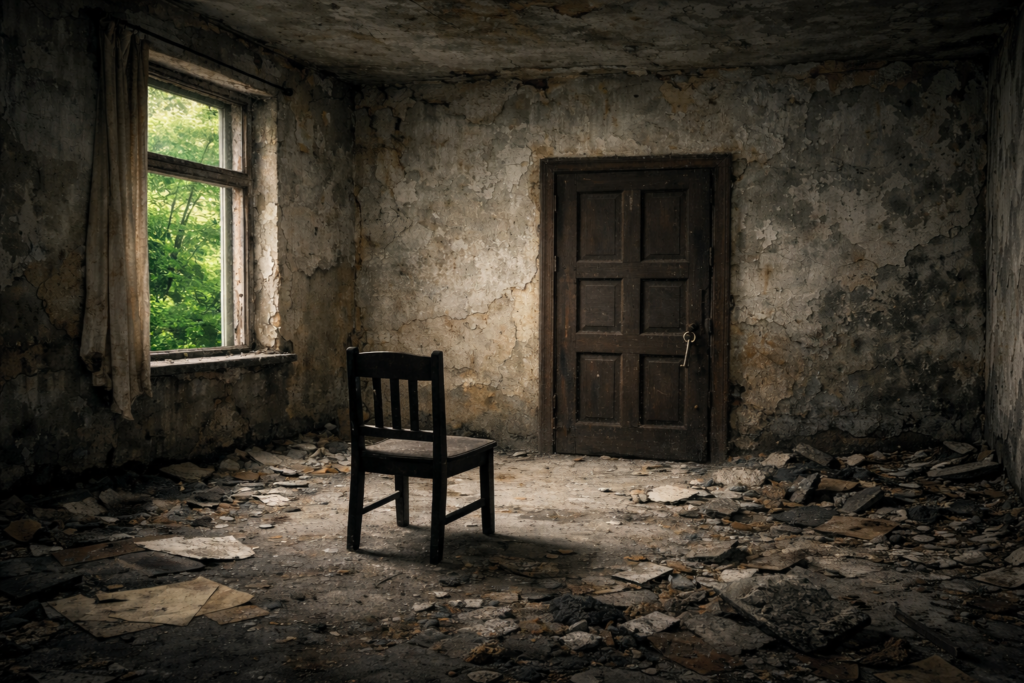
Before it was given as a commandment, it was an interruption—an interruption in the day-by-day toil of life.
What exactly is this thing we call Shabbat—the Sabbath? Where does it come from, and what was it meant to be?
Modern society has rebranded the Sabbath as a “day off,” preserving the language of rest while quietly hollowing out its meaning. It is framed as a pause from work: time to relax, spend time with family, shop for the coming week, and tend to household maintenance. In practice, it has even been stretched into two days.
This is how the everyday man hears the word Sabbath. Yet this understanding bears little resemblance to its origin. From its earliest appearance, the Sabbath carried a weight far greater than leisure or recovery, and that weight is still held closely today.
To understand what the mandated day of rest truly is—and why it matters—we must return to its beginning.
Judaism
Shabbat is a sanctification of time, not space. It represents withdrawal from mastery, not exhaustion; a refusal to finish what G-d has already declared complete. In short, Shabbat is not restorative—it is declarative.
Abraham Joshua Heschel’s The Sabbath (1951) is a meditation on this very idea. Heschel focuses on the differences between time and space. Humanity tends to worship space, seeking to control it, manipulate it. Society measures success in square footage, territory, output, and permanence.
Time, by contrast, resists possession. It cannot be stockpiled or mastered. As such, modern man experiences time as scarcity: there is never enough time to do all that must be done and nothing is ever completed.
Heschel describes the Sabbath as a palace in time—a domain not entered physically, but spiritually. One can neither build nor inhabit the Sabbath in the corporeal sense. In this, holiness is found in moments: time.
On Shabbat, mastery itself is suspended. The drive to manipulate the world is set aside, not because the work is complete, but because completion has already been declared. How could man ever complete that which G-d has already completed and proclaimed good?
Instead, we are commanded to stop mining creation for one day each week—no extracting, building, producing, or reshaping. That one day is meant to be a moment of freedom from possession and a call to contemplate rather than conquer. Heschel is explicit: Shabbat is a day when we cease our assault on the world.
During the week, we live in the world of things; on the Sabbath, we turn to the world of spirit.
Christianity
In Christianity, Christ reorients history; the Sabbath is understood through the resurrection.
Nothing was lost from earlier concepts of Shabbat, but where Judaism sanctifies time, Christianity sees it as redeemed. The Sabbath is still a time of rest and worship remains central; however, contemplation occurs through remembrance and proclamation rather than cessation.
Saint Thomas Aquinas—preeminent Italian Dominican friar, theologian, and philosopher—divided the Sabbath into two parts: the moral principle and the ceremonial expression (Summa Theologiae, II-II, Q122).
The moral principle—that humanity must set aside time for G-d and withdraw from unceasing labor—remains binding. The ceremonial form, however, was oriented toward fulfillment rather than permanence. Aquinas is not merely distinguishing the two, however; ceremonial observances are not ends in themselves. They exist to signify and prepare; once that which they signify has arrived, their binding force dissolves.
This is important to understand as it defines much of early Christianity as a whole. Jesus’ teachings are critical of ceremonial form when it is mistaken for the thing itself. (Consider the prohibition against healing on Shabbat.) One can honor the Sabbath’s intent while simultaneously loosening its structure without disobedience. This softens interruption into remembrance and invites celebration, less solemnity.
Shabbat as Source
The Zoharic tradition recounts tales of Rabbi Shimon bar Yochai. Rabbi Shimon believed Shabbat to be something fundamental: not so much a command to be observed, but rather a condition that sustains the world itself.
Shabbat is not the culmination of the week, but its source. The six days of labor do not lead toward Shabbat as a reward; rather, they proceed from it. Work derives its meaning and its vitality from rest, not the other way around.
Thought of in this way, Shabbat is not an interruption imposed upon the week; it is the underlying orientation of time itself. Creation is sustained not by unbroken activity—mankind is not necessary for the world to continue, after all. It is by recurring return to stillness that we find sustenance and receive revelation.
Rabbi Shimon’s teaching presses the idea further still. If Shabbat is the source from which the other days draw their life, then ceaseless motion is not strength at all—it is imbalance. A world that cannot stop is not a world at full capacity. It is not a world in growth. It is a world cut off from its own ground.
This reframes the question entirely. Shabbat is no longer merely a boundary placed upon human labor, a reward for the week’s endeavors. It’s not a sign to be interpreted or fulfilled. It becomes a measure by which the rest of the week is ordered—and disordered.
If Shabbat is source, then what is work? If creation is already complete and declared good, why six days of labor at all? Rabbi Shimon would say, because completion is not the same as manifestation. The problem is not that we move; the problem is forgetting where movement originates from. Work becomes exile when it forgets return and treats motion as permanent, stillness as interruption, and productivity as identity.
Life Without Interruption
Shabbat served as source and orientation, a method of maintaining some measure of alignment. It was disruptive by design.
Modern life operates as though no such source exists; the absence is not hostile—it is normalized. Inaccessibility itself has become illegitimate. To be unavailable is to be suspect—not resting but shirking, not contemplating but hiding.
Today, we are always connected, responsive, and on. Availability is treated as a basic responsibility. In fact, contemporary systems dictate that which cannot be reached cannot be tolerated. Gone are the days of disappearing, finding stillness. The architecture of modern communication eliminates unreachability—to be out of contact is not merely inconvenient but increasingly impossible. We are always reachable, always productive, always optimizing, and yet somehow always behind.
A life that cannot tolerate interruption has quietly recreated the exile. We no longer mine the earth alone; we mine attention, presence, and time itself. Human beings are treated—and often treat themselves—as resources.
Something Completely Different
What we thought was the journey may actually have been the interruption.
Worth considering—what if Shabbat is not the interruption? What if the other six days are?
This reorders creation: rest-> work, not work -> rest. It recasts Shabbat as the ground, not the exception. The week was never meant to culminate in rest; the weekend is not the reward. The journey only makes sense if there is something priorto it.
Work is a deviation; all the motion of these “first” six days is an interruption of stillness. At present, we seek moments of stillness when they are always there before us. It’s like sitting in a room that’s never allowed to go quiet when we could simply walk out the door. Perhaps the real question should be…
When does interruption actually occur?

Discover more from Many Lamps, One Flame
Subscribe to get the latest posts sent to your email.