
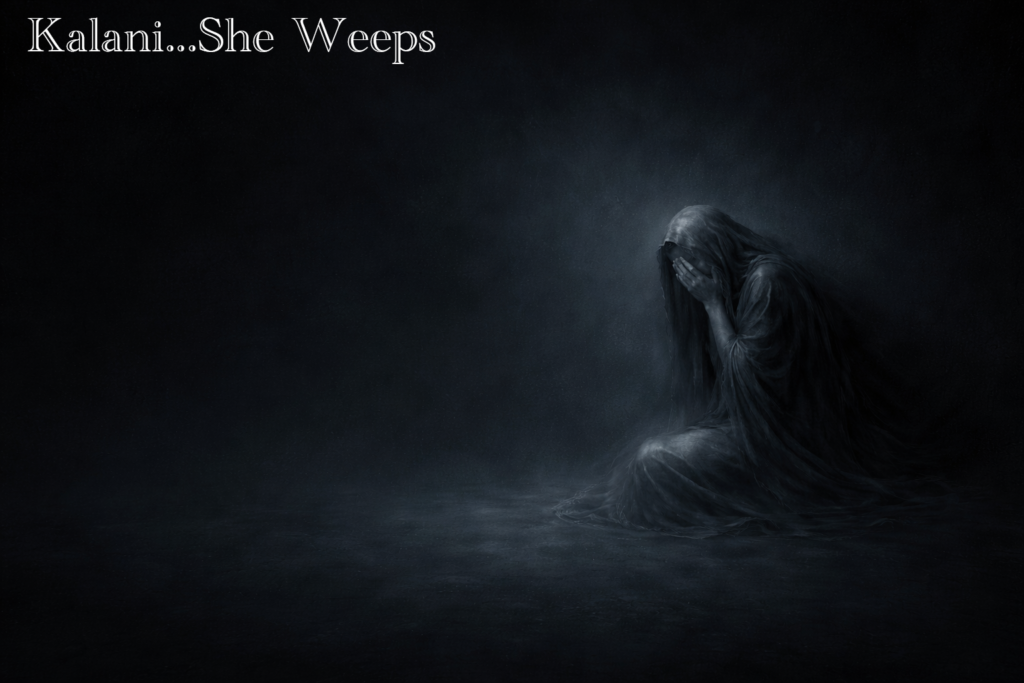
Kalani me-roshi, kalani mi-zero’i.
My head is heavy. My arms are heavy.
This is G-d speaking.
Not metaphor. Not poetic language about divine transcendence observing human suffering from a distance. The Talmud records this in Tractate Sanhedrin: when a person suffers, the Shekhinah says, “My head is heavy, my arms are heavy.”
The Divine Presence does not merely witness our pain. She carries it. Bears it. Is diminished by it.
Suffering—As Covenant
We do not suffer alone.
In the Warsaw Ghetto, Kalonymus Kalman Shapira continued to teach Torah. He was the Piaseczno Rebbe, better known as the Warsaw Rebbe. On Shabbat, in hiding, surrounded by death and starvation and systematic annihilation, he delivered discourses. He wrote them down. When deportations began, he buried the manuscripts in milk cans beneath the ruins.
They were found after the war. Published as Esh Kodesh – Holy Fire.
The theology in those pages does not explain the suffering. It does not suggest that G-d sent this horror to teach or refine or test. It does something more dangerous.
It testifies that G-d suffers with us.
Before 1942, before the mass deportations, there is still some movement toward hope in his words. Afterward, the tone changes. He writes about a G-d whose hiddenness has become unbearable. A G-d who weeps. A covenant that persists even when understanding collapses completely.
He suggests that in times like these, prayer changes form. The suffering itself becomes prayer. Not because it produces meaning, but because there is nothing else left to offer.
He was murdered in 1943.
His theology does not resolve. It bears witness from inside what cannot be borne.
Weight
The Shekhinah—the indwelling presence—does not distribute this burden. She does not assign portions, parceling out grief in manageable doses. She bears all of it. Every instance. Every moment.
We carry our own suffering. Perhaps the suffering of those closest to us, if we are strong enough or loving enough. A parent’s grief. A spouse’s pain. A friend’s loss. Even this limited share can break us. We know this. We have seen it. We have lived it.
The Shekhinah carries all of it.
Every child who starved. Every body broken by violence. Every mind shattered by cruelty. Every heart that stopped from despair. Not metaphorically. Not as distant observation. As lived experience, present tense, accumulated weight.
All the suffering that has ever been.
All the suffering that is.
All the suffering that will ever be.
Natural disaster and human cruelty. Disease and deliberate harm. The suffering we inflict on each other and the suffering we cannot prevent. The animal torn apart. The ocean choked with poison. The forest burning. The child sold. The prisoner tortured. The refugee drowning.
She is with them. With all of them. In the moment of their anguish.
Kalani me-roshi, kalani mi-zero’i.
My head is heavy. My arms are heavy.
This is not poetry. This is weight.
A Moment
After surgery, when the veil thinned and I found myself untethered from ordinary reality, I encountered something I was not prepared for.
A calling. Not to understanding, but to presence. To bear witness. To share in something that had always been there but which I had never been able to perceive.
I felt the weight of divine sadness.
It was not abstract. It was not metaphorical. It was crushing. Immediate. Unbearable.
I understood, in that moment, that I was being called to take on a portion of this grief. To ease the burden on the Shekhinah. To carry some small fragment of what she carries endlessly.
I could not do it.
I tried. I wanted to. The call was clear and I wanted to answer. But the weight was too much. Even a fraction of it—the smallest portion I could perceive—was more than I could bear without being destroyed.
And in failing, I understood something terrible.
If the Shekhinah’s accumulated sadness were released—if the weight she carries were distributed across creation, if we all felt simultaneously what she feels constantly—the anguish would crush everything in an instant. Not gradually. Not over time. Immediately. Completely.
Creation persists because she holds this. Alone.
A Vision
Months later, another vision.
Not the calling this time. Just the image. Clear and unbidden and impossible to forget.
The Shekhinah huddled in a corner of that non-place where I had been when untethered. That space outside ordinary reality where the rules of existence bend and consciousness touches what it cannot contain.
She was weeping.
Not the dignified tears of icons. Not the composed grief of theological description. Huddled. Broken posture. The kind of crying that comes when there is no strength left for anything else.
I see this image still. Every day. Every moment I watch the news, every time I witness what we do to each other, what we permit to continue.
She is there. Carrying it. Holding what we cannot hold.
Covenant
This is the covenant.
Not a contract where obedience earns blessing and disobedience brings punishment. Not a transaction where suffering teaches lessons or refines character or tests faith.
The covenant is mutual presence in anguish.
When we suffer, the Shekhinah suffers. When she is diminished, we are diminished. This is not metaphor. This is the structure of reality under monotheism. G-d is not separate from creation, observing from transcendent distance. The Divine Presence dwells within—Shekhinah means indwelling—which means our pain becomes her pain, our exile becomes her exile.
But the reverse is also true.
When we inflict suffering—on each other, on creation, on ourselves—we add to the weight she carries. Every act of cruelty, every chosen violence, every deliberate harm increases the burden. We are not passive recipients of divine compassion. We are active participants in divine anguish.
The covenant runs both ways.
Transformation
Does suffering bring us closer to G-d?
The question assumes closeness is the goal, as though proximity to the Divine were automatically redemptive. As though transformation through pain were guaranteed to produce something beautiful.
Suffering transforms. This is undeniable. We are not the same after loss, after trauma, after prolonged anguish. Something fundamental shifts. The person who emerges from suffering is not the person who entered it.
But transformation is not sanctification.
Suffering can break us open toward Chesed—loving-kindness, the expansive generosity that holds others’ pain without needing to fix or explain it. The person who has suffered deeply sometimes becomes capable of presence with others’ suffering in ways that those who have been protected cannot access. This is transformation toward beauty. Toward the divine attribute of boundless compassion. Buddhism names this karuna—the capacity to suffer with others without being destroyed by it, to bear witness to pain without turning away.
But suffering can also harden us toward Gevurah—severity, judgment, the contracting force that protects by closing off. And beyond Gevurah lies the Yetzer Hara, the inclination toward harm. The person who has suffered can become the person who makes others suffer. Who needs someone else to carry what they cannot carry. Who distributes their pain outward because holding it inward would mean annihilation.
This transformation creates more anguish. More weight for the Shekhinah to bear.
We choose which transformation suffering produces in us. Not easily. Not clearly. Often we don’t realize we’re choosing. But the direction we turn—toward Chesed or toward Gevurah and beyond—matters. It determines whether our pain adds to the world’s beauty or to its burden.
The Arrows
Buddhism teaches that suffering is optional. That pain is inevitable, but suffering—dukkha—arises from our response to pain through craving, attachment, and aversion. The Four Noble Truths map a path from suffering to liberation: recognize that suffering exists, understand its origin in craving, know that cessation is possible, follow the Eightfold Path to freedom.
This teaching distinguishes between three forms of dukkha. Dukkha-dukkha—the suffering of painful experiences themselves. Viparinama-dukkha—the suffering that comes from change and impermanence. Sankhara-dukkha—the subtle suffering inherent in conditioned existence, the fundamental unsatisfactoriness of being born into a world where everything arises and passes away.
The Buddha’s metaphor of the two arrows captures this precisely. The first arrow is unavoidable pain—illness, loss, death, the body’s deterioration, the mind’s limitations. The second arrow is our response—the stories we tell about the pain, the resistance we mount against it, the meaning we demand from it, the bitterness or despair we construct around it.
Buddhism says: the first arrow is inevitable. The second is optional.
But covenant complicates this.
The Shekhinah does not achieve equanimity. She does not observe suffering from a place of detachment. She bears it. Carries it. Is diminished by it. The covenant means mutual presence in anguish – not transcendence of anguish, not liberation from it, but being with it.
Both arrows.
The first arrow—inevitable pain—is shared. When we suffer, she suffers. This is covenant. This cannot be escaped without abandoning relationship with the Divine Presence who dwells within creation rather than above it.
But the second arrow—our response—matters tremendously. Not because we can achieve freedom from suffering, but because our response determines whether we turn toward Chesed or toward Gevurah and harm. Whether we add weight to what she carries or transform pain into presence.
The person who achieves Buddhist liberation, who releases craving and reaches equanimity, may be free. But they are also alone. The covenant offers no such freedom. It offers only presence. Mutual bearing. Shared diminishment until creation itself is repaired.
We cannot escape the first arrow. We should not multiply the second. But we cannot pretend the arrows don’t land, cannot achieve detachment from the weight, cannot step outside the covenant that binds us to divine grief.
Buddhism itself recognizes this through the Bodhisattva ideal – the enlightened being who delays nirvana to remain present with suffering until all beings are free. Covenant demands something similar: we cannot pursue liberation while the Shekhinah weeps, while creation remains broken, while tikkun olam remains unfinished.
Suffering is not optional in covenant. Response is.
Kalani me-roshi, kalani mi-zero’i.
She is still there. In that corner of non-reality. Weeping.
Not because the suffering will end. Not because meaning will emerge from the anguish. Not because transformation guarantees beauty or closeness or redemption.
She weeps because she carries what we cannot carry. Because the weight accumulates with every moment we choose cruelty over compassion, with every instant we turn our pain outward instead of holding it until it breaks us open.
She weeps because the covenant binds her to us, and us to her, and there is no release from this mutual diminishment until creation itself is repaired.
And we are so far from repair.
I cannot forget the image. Cannot unsee her there, huddled and broken under the accumulated weight of all suffering across all time. Cannot unhear the sound of that weeping.
Every newscast. Every act of violence. Every policy that treats human beings as disposable. Every ocean choked, every forest burning, every child hungry.
She is there—in covenant. Bearing it.
And MY head is heavy.
And MY arms are heavy.

Discover more from Many Lamps, One Flame
Subscribe to get the latest posts sent to your email.