
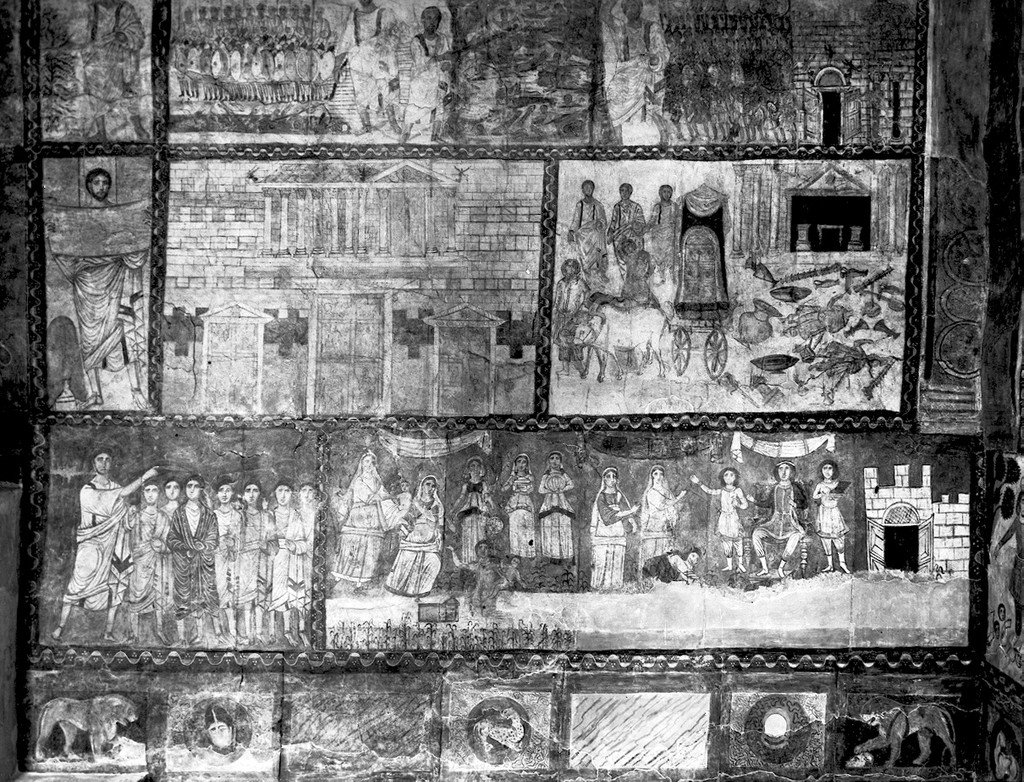
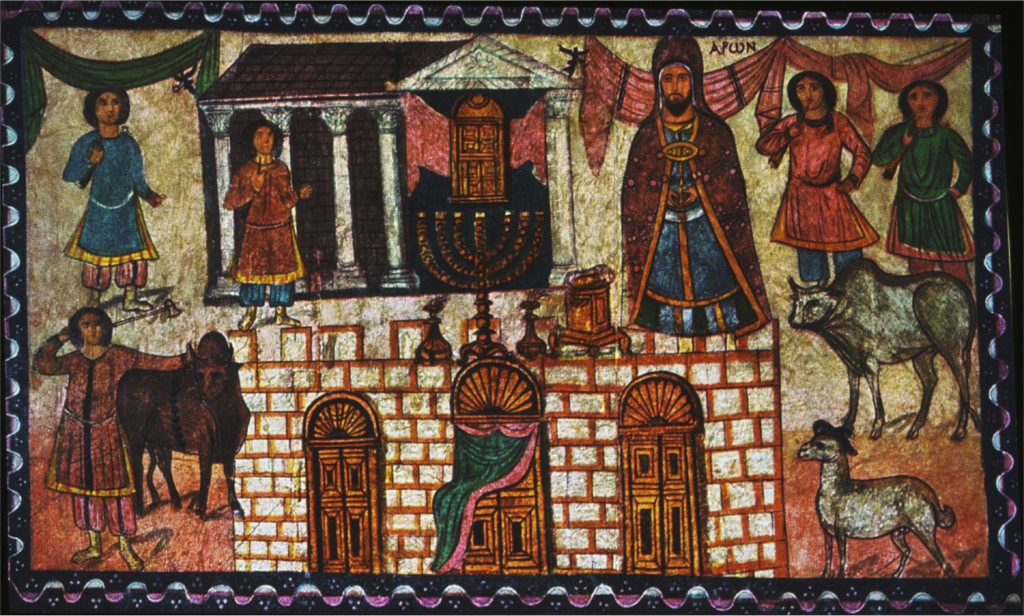
In the summer of 70 CE, Titus’s legions surrounded Jerusalem during Passover—the worst possible moment, the city swollen with pilgrims who now could not leave. The siege lasted five months. When the walls finally broke, the Temple was already burning. Josephus records that Titus initially ordered it spared; the fire was set by a soldier acting without orders, and Titus then commanded the destruction to be completed. Rome did not set out to destroy Judaism’s theological center. It destroyed it as a consequence of military victory and let the destruction stand.
The consequences for two communities would be total and permanent.
Both were Jewish. Both drew their authority from the same texts, the same covenant, the same history. Both had been building their theological lives in the shadow of the Temple and the world it organized. When that world ended in fire, both had to decide—with remarkable speed, under catastrophic pressure—what they actually were without it.
They decided differently. What followed was not a clean separation but a slow, painful, and sometimes violent divergence between two communities that had been, until very recently, the same family. Two traditions. One library. And a catastrophe that forced each to make explicit what had previously been assumed.
The House That Survived
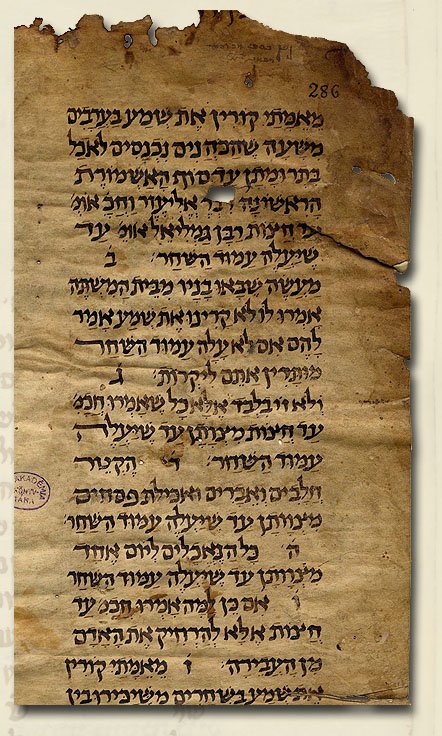
Among the Jewish sects of Second Temple Judaism—Sadducees, Essenes, Zealots, Sicarii, the Jesus movement, and others—only one possessed what the catastrophe required: a theological and institutional architecture that could survive the destruction of the institution it was built around.
The Pharisees had been building that architecture for generations. Their emphasis was on Torah study, on the authority of the rabbinic interpreter, on synagogue worship as a portable alternative to Temple sacrifice. They had not invented these things in anticipation of catastrophe. They had developed them in ongoing theological dispute with the Temple establishment—the Sadducees, the priestly class, the institutional leadership that controlled the sacrificial system. But when the Temple fell and the Sadducees fell with it, the Pharisees were the only movement with the infrastructure to continue.
The account preserved in the Talmud of Johanan ben Zakkai’s escape from Jerusalem has the quality of legend, but its core is historically grounded. Ben Zakkai, one of the leading Pharisaic sages, had opposed the revolt. When the situation in the besieged city became untenable, his disciples smuggled him out in a coffin—playing dead to pass through the Jewish rebel lines—and brought him before Vespasian. Ben Zakkai prophesied that Vespasian would become emperor. When Vespasian did, he honored the prophecy by granting ben Zakkai a request: the town of Yavneh and its sages.
That request was the reconstitution of Judaism.
At Yavneh, the rabbinic academy became the new institutional center. Prayer replaced sacrifice. The rabbi replaced the priest. The synagogue—already functioning across the diaspora as a community center, court, and house of study—replaced the Temple as the organizing institution of Jewish life. Torah study became the central act of worship, the means by which the community maintained its covenantal relationship with G-d in the absence of the sacrificial system that had previously mediated that relationship.
The Mishnah, compiled at Yavneh and its successor academies over the following century and a half, is the product of this reconstitution—the first major written redaction of the Oral Torah, a systematic organization of Jewish law and practice that did not depend on a Temple, a priesthood, or a geographic center. Its completion around 200 CE, under Rabbi Judah HaNasi, represents the stabilization of a tradition that had been in emergency reconstruction for more than a century.
This is one of the most remarkable acts of institutional survival in human history. A religion centered on a building that no longer existed reconstituted itself, in the span of a single generation, into a form that could survive anywhere—and would have to. The Pharisees did not simply outlast their rivals. They possessed an organizational architecture that could survive the destruction of the organization itself. That is an extraordinary historical achievement, and it deserves to be named as such.
The Branch That Traveled
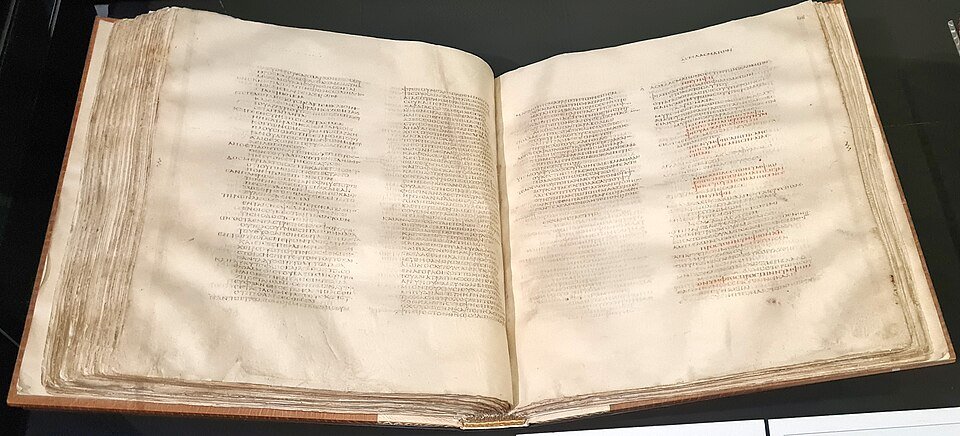
The Jesus movement in 70 CE was already something different from what it had been in 30 CE. Paul’s Gentile mission—conducted in the decades between the crucifixion and the Temple’s destruction—had moved the center of gravity decisively away from Jerusalem and toward the diaspora communities of the Mediterranean. Communities in Corinth, Ephesus, Antioch, and Rome were already functioning without any direct connection to the Temple, already working through what it meant to be followers of a Jewish Messiah without being Jewish in the traditional sense.
When the Temple fell, the Jesus movement did not experience the reconstitution crisis that the Pharisees faced. It had already been building its theological life elsewhere. But the destruction of Jerusalem did something else: it provided, in retrospect, what looked like confirmation. The catastrophe that shattered the institutional center of Judaism appeared, from inside the Jesus movement, to validate the argument that the Temple-centered order had run its course—that the destruction was not accident but judgment.
The Gospel accounts were written in this period and this climate. Mark around 70 CE. Matthew and Luke in the 80s. John in the 90s. They were written by communities increasingly Gentile in composition, increasingly distant from their Jewish origins, and increasingly in active competition with the Pharisaic movement that was simultaneously consolidating its own claim to represent the authentic continuation of Israel’s covenant.
This is not simple. Christianity did not leave Judaism in one clean departure. Judaism was changing at the same time Christianity was changing, and both were changing in response to the same catastrophe and the same competitive pressures. The traditions were not two static objects moving apart from each other. They were two moving communities, both adapting, both reconstituting, both making claims on the same inheritance—and those claims were becoming increasingly incompatible.
The shift in language across the Gospel accounts traces this divergence in real time. The Synoptic Gospels—Matthew, Mark, Luke—argue primarily with the Pharisees. The conflicts are specific, the debates are recognizably intra-Jewish, the rhetoric is harsh by modern standards but consistent with first-century Jewish polemical convention. By the time John was written, something had changed. Where the Synoptics say ‘the Pharisees,’ John says hoi Ioudaioi—the Jews. Not a sect, not a leadership class, not a particular opposing party. The Jews as a collective, a category, a weight against which Jesus operates. The community that produced John was no longer in living contact with the Jewish community. It was looking back across a growing distance and describing what it saw—and what it saw was not a family dispute but a foreign opposition.
That linguistic shift is not incidental. It is the first major instance of migration: a specific charge, originally directed at a specific group in a specific context, detaching from that context and becoming applicable to an entire people. The Pharisees were a Jewish sect. The Jews were everyone who had not accepted Christ. The distance between those two referents is the distance between an intra-Jewish argument and the foundation of a nearly two-millennia-long tradition of contempt.
The Argument Over the Inheritance
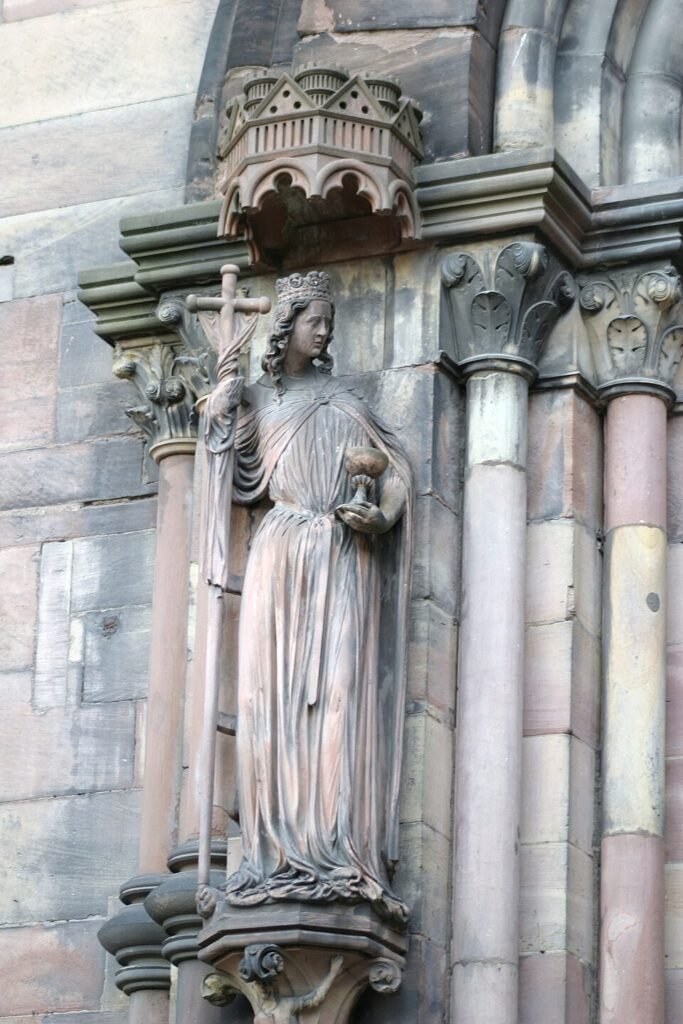
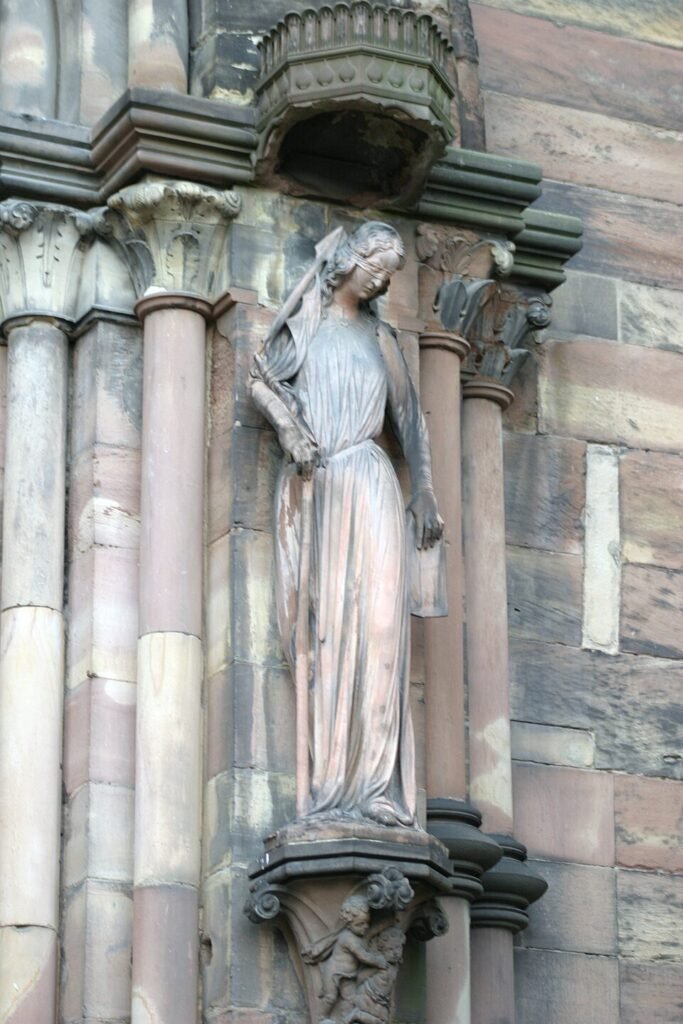
Ecclesia and Synagoga, Strasbourg Cathedral, ca. 1230 CE. The triumphant Church and the blindfolded, defeated Synagogue—the supersessionist argument made permanent in stone. These figures were carved more than a thousand years after the theological argument they depict was first constructed, and they still stand at the cathedral entrance where every congregant passes.
Two traditions. One library. And a theological problem that admitted only two possible solutions.
Both rabbinic Judaism and early Christianity were making claims on the same textual inheritance—the Torah, the Prophets, the Writings. Both were arguing that they represented the authentic continuation of what Israel had always been. Both were reading the same catastrophe as confirmation of their respective positions.
For the rabbis, the Temple’s destruction was a consequence of Israel’s failure to keep the covenant—not evidence that the covenant was void, but evidence that it remained in force and demanded renewed fidelity. The response was intensified Torah observance, intensified study, intensified communal discipline. The covenant continued. The people continued. The texts continued. Judaism’s claim was not that nothing had changed. It was that what had changed did not change the fundamental relationship between G-d and Israel.
For the early Christian theologians, the Temple’s destruction was G-d’s judgment on a people who had rejected the Messiah. The covenant had not been broken—it had been transferred. The Church was the new Israel. The catastrophe was the evidence. This argument required explaining why the people who should most obviously recognize the Messiah—the Jews, the original covenant community, the very people the Messiah came from—did not. The early patristic writers had a solution: Jewish blindness was itself part of the divine plan, predicted in scripture, confirmed by the Temple’s destruction, and now visible in the ongoing condition of the Jewish people.
This is not a defensive posture born of uncertainty. It is a systematic theological program, developed with confidence and precision. The early patristic writers were certain of their claims. The program was constructed to accomplish what certainty alone could not: to claim the entire Jewish textual inheritance for Christianity, to explain Jewish non-acceptance as confirmation rather than refutation, and to establish a theological account of history in which the catastrophe of 70 CE was legible as divine verdict rather than Roman policy.
The sociological pressure was equally real. Judaism remained a living competitor. The phenomenon of the God-fearers—Gentiles who attended synagogue, observed Jewish practice in part, and found the ancient tradition compelling without formally converting—was sufficiently documented to be a recognized social category in the early centuries. Gentile audiences were not automatically gravitating toward Christianity. They had options. The theological program being constructed was not only about defining what Christianity was. It was about winning a competition that had not yet been decided—and doing so in terms that Roman authorities, as well as Gentile audiences, could find persuasive.
Justin Martyr, writing in the mid-second century, makes the argument explicit in his Dialogue with Trypho: Jewish suffering is the proof of Jewish rejection. The destruction of Jerusalem is not a historical accident but a divine verdict. Circumcision was given to the Jews precisely so that they would be identifiable for judgment. Tertullian, writing in the late second and early third centuries, systematizes the typological method: every element of the Hebrew Bible is a prefiguration of Christ, which simultaneously claims the entire Jewish textual inheritance for Christianity and reframes Judaism’s ongoing practice of that inheritance as willful blindness to its own meaning.
The bitterness of these arguments is the bitterness of siblings fighting over an estate. You cannot construct contempt of this intensity toward a stranger. The early Church Fathers were not writing about an alien tradition they had observed from a distance. They were writing about a tradition from which they had emerged, whose texts they had inherited, whose G-d they worshipped, and whose ongoing existence represented a standing challenge to their claims. Jewish communities were flourishing. Jewish practice remained attractive to Gentile audiences—the phenomenon of the ‘G-d-fearers,’ Gentiles who attended synagogue without formally converting, was sufficiently common to be a documented social category in the early centuries. The theological program being constructed was not simply about defining Christianity. It was about winning a competition that had not yet been decided.
Under Rome, Before Constantine

Both communities spent the second and third centuries navigating a Rome that had developed its own framework of contempt for Jews through two catastrophic wars—and had not yet decided what to do with the Christian movement.
Rabbinic Judaism had achieved a grudging legal accommodation. The Bar Kokhba revolt had ended in catastrophic losses, but the rabbinic movement had not participated in the revolt and emerged with its institutional structure intact. The patriarchate—the office of the Nasi, the recognized leader of the Jewish community—gave Jewish communal life a legal framework within which it could function under Roman supervision. Judaism was a religio licita, a permitted religion, with the exemptions and legal restrictions that status carried. The community was contained, categorized, taxed through the fiscus Judaicus, and denied access to Jerusalem—but it was permitted to exist.
The early Christian movement was in a more precarious position. It had no legal standing, no recognized leadership structure Rome could negotiate with, no ancient pedigree that might earn the tolerance Rome extended to old religions. It was periodically persecuted—under Nero, under Domitian, under Decius, under Diocletian—and its vulnerability was real. The movement needed Rome’s goodwill to survive, and it could not afford association with the community Rome had most visibly and violently crushed.
Christian apologists of the second and third centuries went to considerable lengths to distinguish Christianity from Judaism in Roman eyes—not only theologically but politically. The argument, made repeatedly to Roman authorities, was that Christianity was not a Jewish sect, did not share Jewish political ambitions, posed no threat to Roman civic order. Tertullian’s Apology, Origen’s Contra Celsum, Justin Martyr’s own Apologies to the Roman emperor—these texts are simultaneously theological defenses of Christianity and political arguments for its toleration. Making that argument required making the distinction from Judaism visible, legible, and persuasive. It required showing Rome that Christianity was something different.
The theological program and the political necessity reinforced each other. Supersessionism was not only a response to the competitive pressure of Jewish claims on shared texts. It was also a useful argument in the context of Roman administration: Christianity was the fulfillment of Judaism, Judaism had been superseded and judged, and therefore the Jewish political category—the religio licita, with all its connotations of rebellion and administrative difficulty—did not apply to Christians. The argument that served the theological competition also served the political survival.
By the time the third century ended, two things were true simultaneously. Judaism had reconstituted itself as a durable, portable, text-based tradition capable of surviving anywhere. And Christianity had developed a sophisticated theological program that claimed Judaism’s inheritance, explained Judaism’s refusal as divine judgment, and distinguished itself from Judaism in terms both Rome and its own growing Gentile constituency could understand. The ground was set. What it needed was power.
Constantine
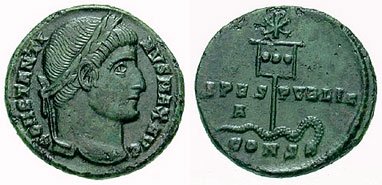
313 CE. The Edict of Milan. Constantine extends tolerance to all religions within the empire, including Christianity. The movement that had been navigating the margins of Roman power for three centuries—periodically tolerated, periodically hunted, always dependent on the goodwill of an administration that could revoke that goodwill at any moment—finds itself not merely permitted but favored.
Within a generation it will be the empire’s official religion.
The branch that had been distancing itself from its Jewish roots for two centuries, that had been constructing its theological identity in explicit contrast to the community from which it emerged, now stands at the center of the most powerful institution in the Western world. The theological program developed under competitive pressure and political necessity—supersessionism, the transfer of the covenant, the reading of Jewish suffering as divine judgment—will soon carry the weight of empire behind it.
And Judaism—which had survived the Temple’s destruction, reconstituted itself at Yavneh, maintained its legal standing as a permitted religion, outlasted two catastrophic revolts, continued to build synagogues and write Mishnah and attract Gentile audiences throughout the Mediterranean—is about to face something genuinely new. Not Rome as an adversary, which it knew how to navigate. Not Rome as an indifferent administrator, which it had managed for generations.
Rome as a convert.
An empire that has absorbed the theological language, the institutional claims, and the supersessionist program of a tradition that defines itself in part by its relationship of replacement to Judaism. An empire that now has institutional, legal, and political reasons to treat Jewish existence not merely as administratively inconvenient but as theologically problematic. An empire that has inherited, along with Christianity, the argument that Jewish suffering is divine confirmation of Jewish rejection—and that now has the apparatus to make that argument enforceable.
What had begun as a dispute within a family—two communities reading the same texts, claiming the same covenant, arguing over the meaning of the same catastrophe—had become something else entirely. The shared origin was real. The shared library was real. But three centuries of divergence, under pressure, had produced two traditions that no longer inhabited the same world. They had become, institutionally and theologically, separate civilizations.
And then one of those civilizations absorbed the empire.
The dominant expectation in the first century had been that the Messiah would transform Israel and thereby defeat Rome. What actually happened was almost the inverse. No legion was defeated. No emperor was overthrown. Yet three centuries after the crucifixion, the empire that had executed Jesus carried his banner—and with it, a theological program that had spent two centuries defining itself against the tradition from which Jesus himself had come. Rome did not merely become Christian. It became Christian after two centuries of theological construction already aimed directly at Judaism—already carrying the argument that Jewish suffering was divine confirmation of Jewish rejection, and now possessing the apparatus to make that argument enforceable.
That is what changed at Constantine. Not the theology—the theology had been under construction for two centuries. What changed was the power behind it.

Discover more from Many Lamps, One Flame
Subscribe to get the latest posts sent to your email.