
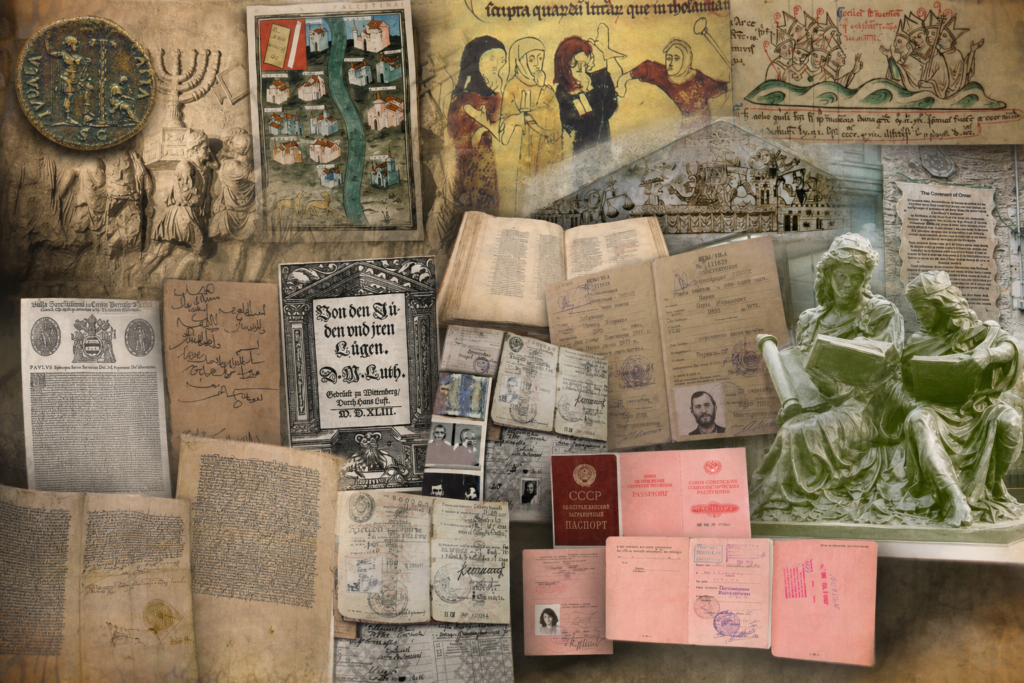
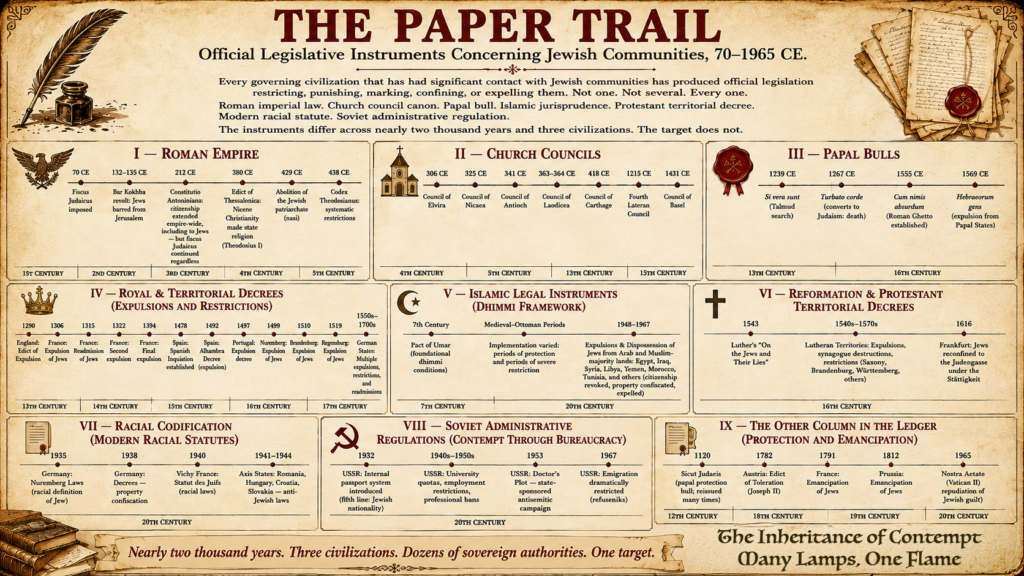
Every governing civilization that has had significant contact with Jewish communities has produced official legislation restricting, punishing, marking, confining, or expelling them. Not one. Not several. Every one.
Roman imperial law. Church council canon. Papal bull. Islamic jurisprudence. Protestant territorial decree. Modern racial statute. Soviet administrative regulation. The instruments differ across nearly two millennia and three civilizations. The target does not.
What is most striking about this record is not the violence it enabled. It is the formality. Civilization after civilization decided to write it down.
What follows is the record.
The Roman Fiscal Foundation
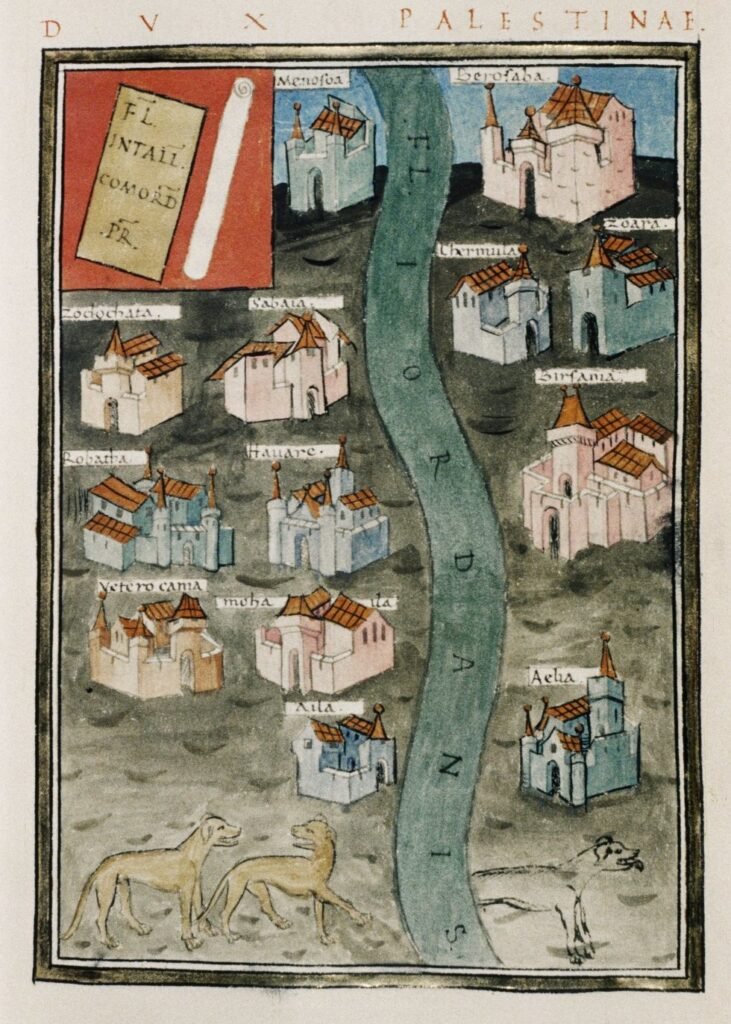
Before Christianity became the empire’s official religion, Rome had already established the principle of collective Jewish taxation as punishment. The fiscus Judaicus (70 CE)—examined in detail in the third piece of this series—redirected the annual contribution that Jews throughout the empire had voluntarily sent to the Temple in Jerusalem and made it a compulsory levy payable instead to the temple of Jupiter Capitolinus in Rome. Every Jew in the empire, whether or not they had any connection to the revolt that precipitated the Temple’s destruction, paid it annually. Contempt encoded not as violence but as paperwork.
The Codex Theodosianus (438 CE) systematized what had accumulated across three centuries of imperial legislation into a single authoritative text. Jews were barred from holding public office, from military service, from building new synagogues, from owning Christian slaves, from marrying Christians, from accepting converts under penalty of death. The Jewish patriarchate—the office of the Nasi, the recognized communal leadership structure that had given Jewish communities their legal framework since Yavneh—was abolished in 429 CE, leaving the community without institutional representation for the first time in three and a half centuries.
The administrative framework of Jewish subordination was fully in place before Theodosius made Christianity mandatory. What Christianity added was theological justification. What the Church added was perpetual institutional maintenance. What the centuries added was elaboration, refinement, and the weight of precedent.
The Councils: Separation by Decree
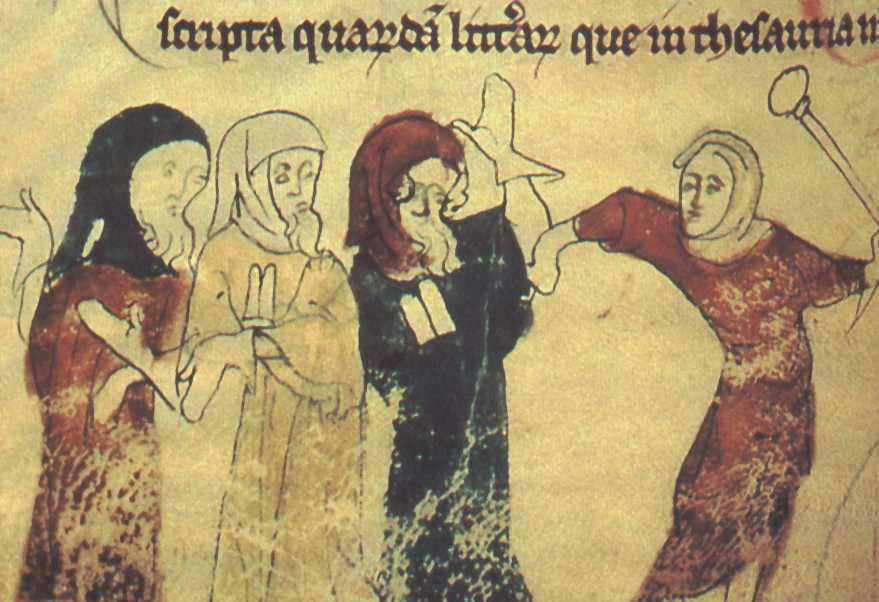
Beginning in the 4th century—before the ink was dry on Constantine’s Edict of Milan—Church councils systematically legislated the separation of Christian practice from Jewish contact. The Council of Elvira (306 CE) prohibited Christians from eating with Jews, marrying Jews, or receiving blessings from Jewish individuals. The Council of Nicaea (325 CE) severed the calculation of Easter from the Jewish Passover calendar, explicitly and deliberately—Constantine’s letter on the matter states that it is unseemly to follow the practice of the Jews. The Council of Antioch (341 CE) prohibited Christians from celebrating Passover alongside Jews. The Council of Laodicea (363–364 CE) forbade Christians from resting on the Sabbath or receiving unleavened bread from Jews. The Council of Carthage (418 CE) reinforced the intermarriage prohibition.
These councils convened in Spain, Syria, Asia Minor, and North Africa. They were not coordinating. They were expressing the same institutional impulse independently: Christian identity required legal distance from Jewish practice, and that distance required enforcement.
The Fourth Lateran Council (1215 CE) represents the medieval culmination. The badge requirement—mandated across all Christian territories, to be enforced by the secular rulers of each country. Barred from public office. Required to pay tithes to local churches. Prohibited from appearing in public during Holy Week. Two of Innocent’s successors spent their pontificates demanding that local rulers actually enforce what the council had decreed. The badge traveled from Rome to a yellow circle sewn onto clothing in England, France, Germany, and Spain within a generation.
The Council of Basel (1431 CE) added further elaborations: Jews barred from universities, prohibited from acting as agents in contracts between Christians, required to attend church sermons. The Council was not innovating. It was doing what every council before it had done—taking the existing tradition and adding another layer.
The Papal Bulls: Rome Writes It Down
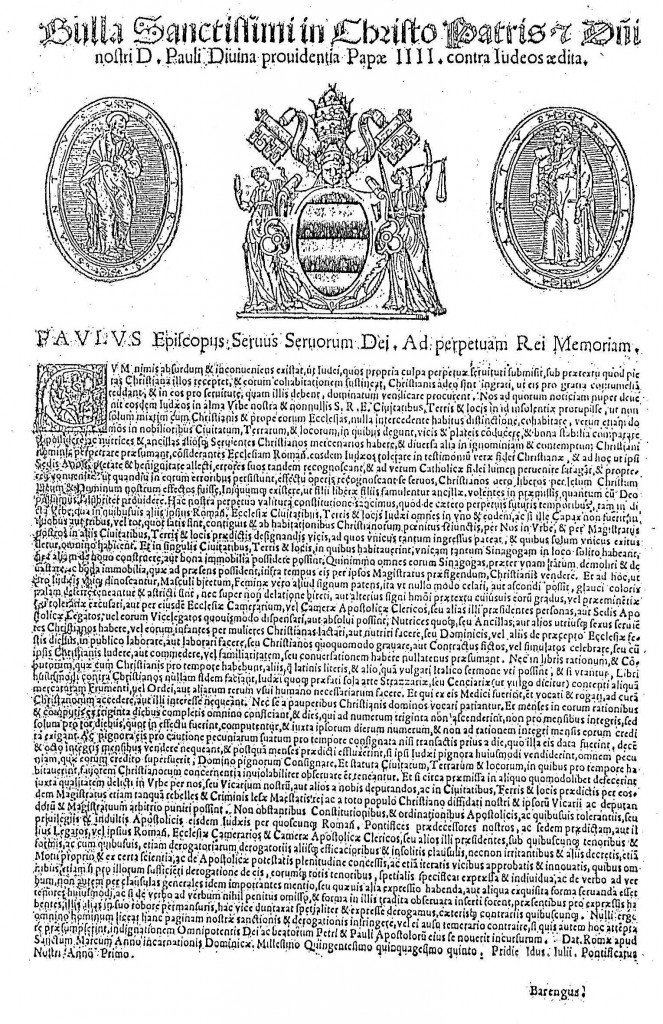
The papal bull is the most formal instrument of Church legislative authority—a document bearing the pope’s lead seal, addressed to the universal Church or to specific rulers, carrying canonical force. The record of papal bulls concerning Jews spans more than four centuries and constitutes one of the most sustained legislative campaigns against a single community in institutional history.
Si vera sunt (Gregory IX, 1239) ordered the seizure and examination of the Talmud and all other Jewish religious texts suspected of containing blasphemies against Jesus and Christianity. The Talmud was publicly burned in Paris in 1242. Book burnings of Jewish texts were ordered repeatedly across the following three centuries—Paris, Rome, and throughout the Italian peninsula. The books of a tradition were treated as criminal evidence.
Turbato corde (Clement IV, 1267) ordered the Inquisition to pursue and prosecute Christians who converted to Judaism. The penalty was death. The bull was reissued by multiple subsequent popes. Conversion to Judaism was not merely a spiritual error—it was a capital crime.
Cum nimis absurdum (Paul IV, 1555) revoked all existing rights of the Jewish community in the Papal States, established the Roman Ghetto—a walled quarter with three gates locked at night—required Jews to wear yellow hats, barred them from owning property or practicing medicine on Christians, and restricted them to a single synagogue per city. The community that had existed in Rome since before the Christian era—predating the papacy by centuries—was confined to a walled enclosure within walking distance of St. Peter’s Basilica.
Hebraeorum gens (Pius V, 1569) expelled Jews from the Papal States entirely, with the exception of Rome and Ancona. Communities that had existed for centuries were given ninety days to leave.
The interval between Cum nimis absurdum (1555) and Nostra Aetate (1965) is four hundred and ten years. The Roman Ghetto was not abolished until 1870, when Italian unification ended papal temporal authority. The ghetto walls stood for three hundred and fifteen years.
The Expulsions: The Utility Cycle in Law
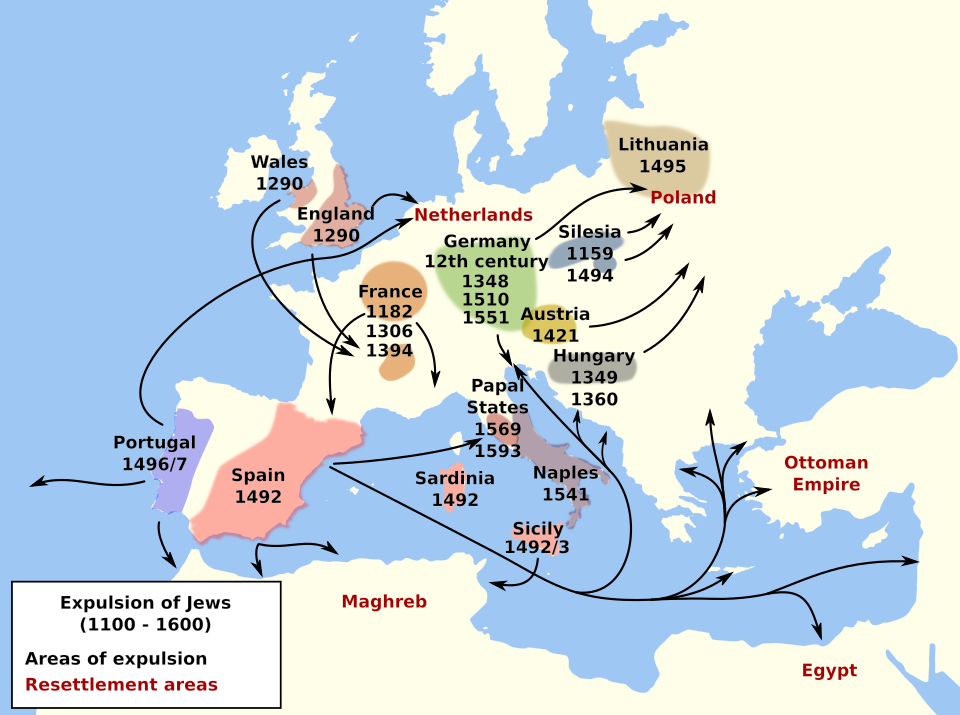
The legislative instruments of expulsion are the utility cycle given official legal form. England’s Edict of Expulsion (1290) ordered all Jews to leave the kingdom by All Saints’ Day—the first complete national expulsion of a Jewish community in medieval Europe. The community had existed in England since the Norman Conquest. It was gone by November 1.
France expelled its Jewish community in 1306, readmitted them in 1315, expelled them again in 1322, readmitted them again, and expelled them definitively in 1394. The cycle of expulsion and readmission is itself the documentation: the community was useful enough to readmit repeatedly and inconvenient enough to expel repeatedly, each decision expressed as royal decree.
The Alhambra Decree (March 31, 1492) ordered the expulsion of all Jews from Spain who refused baptism. A community that had served Iberian intellectual, commercial, and administrative life for centuries—physicians, astronomers, philosophers, financiers, administrators—was given four months to convert or leave everything it had built. Portugal followed in 1497. Various German territories expelled their Jewish communities across the 15th and 16th centuries—Nuremberg (1499), Brandenburg (1510), Regensburg (1519)—each expulsion documented in territorial law.
The Spanish Inquisition (established 1478) extended its reach to conversos—Jewish converts to Christianity—generating legislation barring descendants of Jews from universities, religious orders, public office, and a long list of professions, regardless of their own or their parents’ sincerity of conversion. Blood rather than belief had become the operative legal category. The limpieza de sangre—blood purity—statutes established the principle that Jewish identity was hereditary and indelible, that conversion could not wash it out. This was a century before the Nuremberg Laws made the same claim explicitly and applied it as state racial policy.
The Dhimmi Framework and Its Modern Descendants
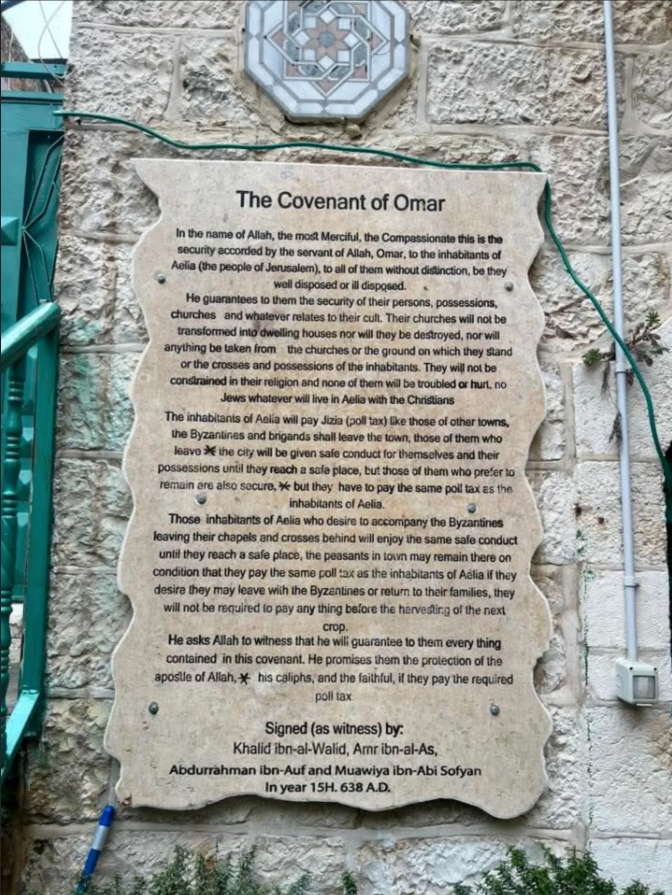
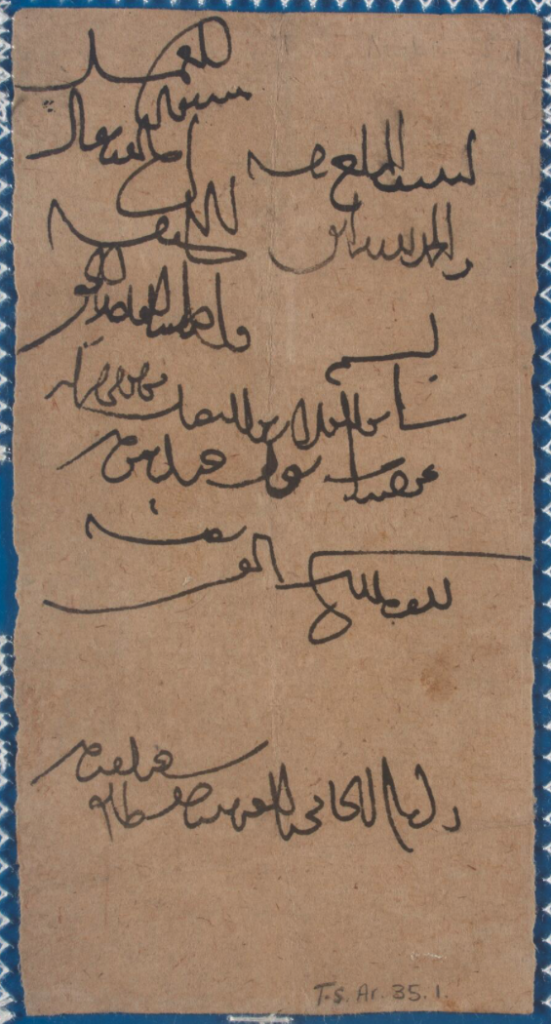
The Islamic legislative tradition regarding Jews is not identical to the Christian one, and it requires clear distinction. The dhimmi system—the legal framework governing non-Muslim minorities under Islamic governance—granted Jews and Christians protected existence within Islamic polities but at the price of systematic legal subordination. The Pact of Umar, attributed to the 7th century and elaborated across subsequent centuries, codified these restrictions: special taxation through the jizya, restrictions on building or repairing houses of worship, prohibition on riding horses or bearing arms, required distinctive dress in some periods and places, prohibition on testimony against Muslims, and various forms of public deference to Muslim authority.
Implementation varied significantly across time and place. Jewish communities under Abbasid, Fatimid, and Ottoman rule experienced periods of genuine prosperity, legal protection, and intellectual flourishing alongside periods of severe restriction and violence. The golden age of Jewish intellectual life in Al-Andalus occurred under Islamic governance. The Ottoman Empire welcomed the Sephardic Jews expelled from Spain in 1492 while the Christian kingdoms of Europe were burning them out. The dhimmi framework was not monolithic, and the Islamic record regarding Jews is not uniformly hostile. But the framework was consistent in its fundamental premise: Jewish existence was legally tolerated, permanently subordinated, and subject to revocation at the discretion of Islamic authority.
The founding of the State of Israel in 1948 precipitated the displacement of approximately 850,000 Jews from Arab and Muslim-majority countries—Egypt, Iraq, Syria, Libya, Yemen, Morocco, Tunisia, Algeria, and others. This was not primarily spontaneous communal violence. It was in most cases legally structured: Egyptian legislation stripping Jews of citizenship and confiscating their property; Iraqi legislation canceling the citizenship of Jews who emigrated, making their departure permanent and their property forfeit; Libyan legislation prohibiting Jewish property ownership; Syrian legislation restricting Jewish movement and freezing Jewish assets. These were official instruments, drafted by governments, signed by ministers, enforced by state apparatus.
The modern expression of the dhimmi tradition’s breakdown produced its most documented historical instruments in the period surrounding the founding of the State of Israel in 1948. The displacement of approximately 850,000 Jews from Arab and Muslim-majority countries—Egypt, Iraq, Syria, Libya, Yemen, Morocco, Tunisia, Algeria, and others, a figure documented by the World Jewish Congress and corroborated by independent demographic research—was in most cases legally structured: Egyptian legislation stripping Jews of citizenship and confiscating their property; Iraqi legislation canceling the citizenship of Jews who emigrated, making their departure permanent and their property forfeit; Libyan legislation prohibiting Jewish property ownership. These were official instruments, drafted by governments, signed by ministers, enforced by state apparatus. Communities that had existed for centuries were legally erased within a decade.
Contemporary instruments of Islamic state policy regarding Jews belong to the series’ final examination of the present moment. What the historical record through 1967 already establishes is this: the dhimmi framework was a documented, institutional tradition of Jewish subordination that shaped governance across the Islamic world for more than a millennium, produced its most catastrophic modern legal expression in the 1948–1967 period, and has not been comprehensively repudiated by any major Islamic institution.
The Reformation’s Legal Inheritance
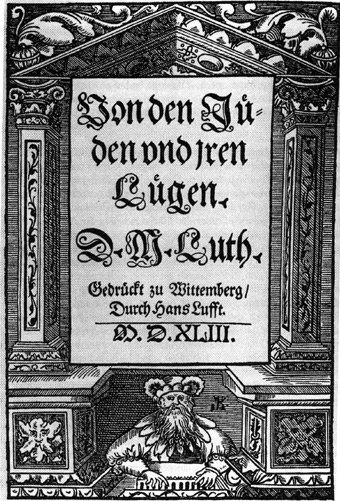
Martin Luther’s Von den Jüden und iren Lügen (1543)—examined in full in the following piece—was not enacted as imperial law. But it was not merely rhetorical. Luther made seven specific policy recommendations: burn the synagogues, destroy Jewish homes, confiscate Jewish prayer books and Talmudic writings, prohibit rabbis from teaching on pain of death, revoke safe conduct for Jews on the roads, prohibit usury and confiscate Jewish assets, and force Jews into compulsory labor. Several German princes and territorial authorities implemented versions of these recommendations in the decades following publication—expulsion of Jews from Saxony, Brandenburg, and other Lutheran territories, destruction or seizure of synagogues, restriction of Jewish movement and commerce.
The theological argument Luther provided gave these territorial actions a doctrinal foundation they had previously lacked in Protestant jurisdictions. Where Catholic anti-Jewish legislation could appeal to canon law and papal authority, Protestant territorial legislation now had Luther. The tradition he inaugurated ran through three centuries of Protestant legal precedent in German-speaking territories—a tradition in which Jewish subordination was theologically grounded in Lutheran doctrine and institutionally expressed in law.
The connection between Luther’s recommendations and the events of November 9–10, 1938 is not metaphorical. On Kristallnacht, Nazi publications explicitly celebrated the burning of synagogues in honor of Luther’s birthday—November 10. Julius Streicher, publisher of Der Stürmer, stated at the Nuremberg trials that Luther had said the same things he himself had written. This was a conscious historical citation, not an analogy. When the Nazi regime enacted the Nuremberg Laws in 1935, it was not departing from German legal tradition regarding Jews. It was systematizing and racializing it.
The Racial Codification
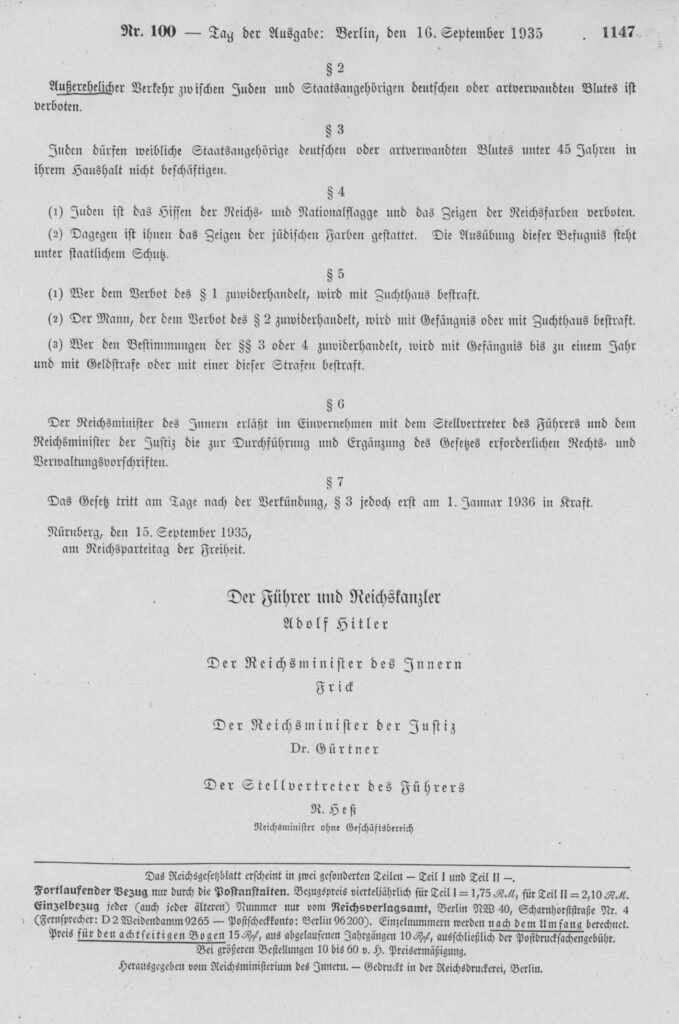
The Nuremberg Laws (September 15, 1935)—the Law for the Protection of German Blood and German Honor, and the Reich Citizenship Law—represent the decisive modern mutation of the legislative tradition: the replacement of religious and economic categories with biological ones. Jews defined not by religious practice or community affiliation but by ancestry. The grandparent rule. The quarter-Jew, the half-Jew, the full Jew—categories determined by blood, not by any act or belief of the individual. A person who had never entered a synagogue, who did not speak Yiddish, who had converted to Christianity two generations prior, was legally a Jew under the Nuremberg Laws and subject to all their provisions.
The precedent had been established four centuries earlier. The Spanish limpieza de sangre statutes—beginning in Toledo in 1449, extended across the Iberian kingdoms across the following century—barred descendants of Jews from offices and professions regardless of their own Christianity. Conversion was insufficient. Blood was the category. The Nuremberg Laws extended and systematized this precedent with the apparatus of the modern bureaucratic state: population registration, identity documents, census data, administrative enforcement, and eventually the machinery of industrial murder.
Vichy France’s Statut des Juifs (October 3, 1940)—among the earliest racial legislation in occupied Western Europe not directly authored by German occupiers—barred Jews from public office, the press, film, theater, education, and the liberal professions. Romania, Hungary, Croatia, Slovakia, and other Axis-aligned states enacted comparable legislation. These were not solely occupation policies imposed by external force. They were the choices of governments that reached for the available legislative tradition and found it fully formed, waiting.
The Soviet Record
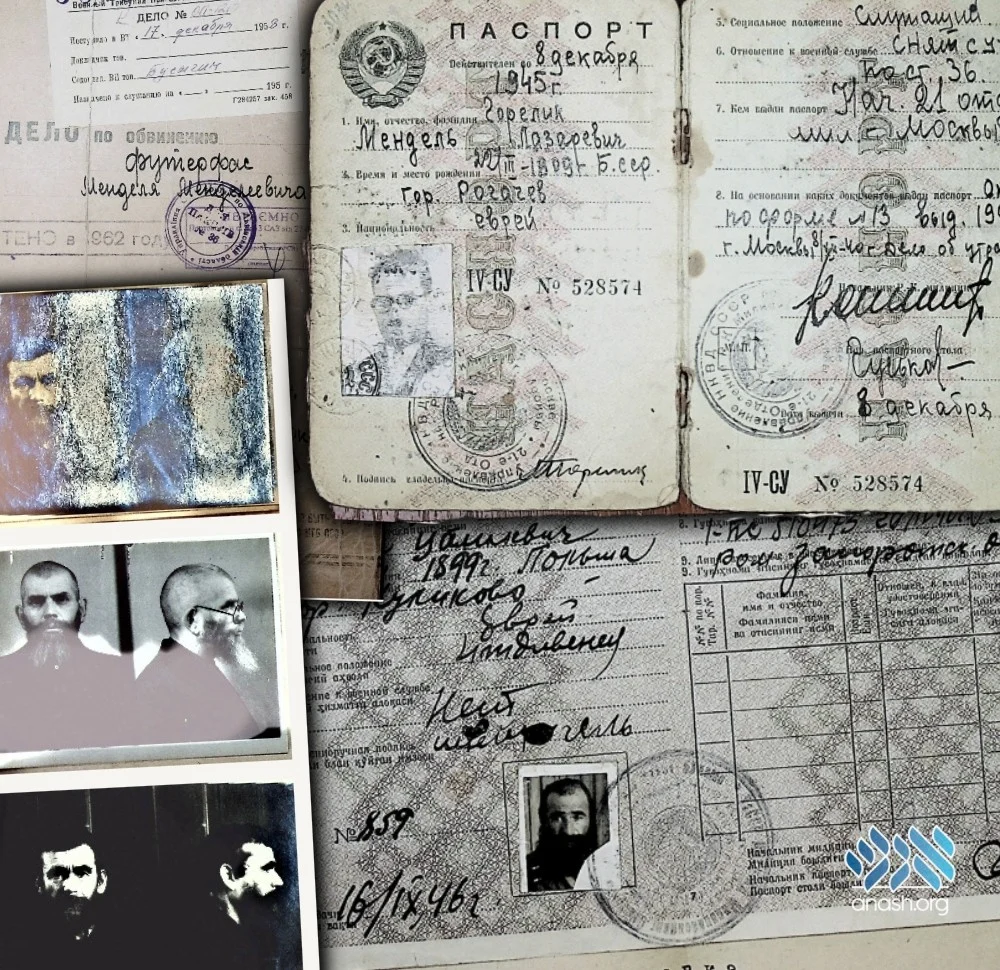
The Soviet case requires separate examination, because it removes the remaining explanatory frameworks. The Soviet Union presents the most instructive case in the legislative record: a state that had officially abolished religion, officially rejected racial categories, officially committed itself to the equality of all nationalities—and systematically discriminated against its Jewish population through mechanisms that were none of these things. The Soviet case demonstrates that the contempt did not require theological infrastructure. It required only a state apparatus and a community to target.
The internal passport system—introduced in 1932 and maintained until the Soviet Union’s collapse—required every Soviet citizen to carry an internal passport containing a fifth-line entry: natsionalnost, nationality. For Jewish citizens, this entry read Yevrey—Jew. It was determined by parentage, not by religious practice or cultural identification. A Soviet Jew who had never attended synagogue, who spoke only Russian, whose parents had been committed Communists, carried the fifth line. The passport was required for employment, housing, university admission, and travel within the country. The fifth line determined access to all of them.
The numerus clausus—quota system—restricted Jewish admission to universities, certain professions, the diplomatic corps, the upper ranks of the Communist Party, and positions in sensitive industries and institutions. These quotas were not written into formal law. They were implemented through administrative practice, institutional culture, and the discretion of admissions committees and party officials who understood what was expected. The effect was identical to formal legislation: Jewish citizens were systematically excluded from opportunities available to their non-Jewish counterparts, through mechanisms that left no paper trail directly attributable to official anti-Jewish policy.
The Doctor’s Plot (January 1953) made the mechanism explicit. Stalin announced that a group of prominent Soviet physicians—predominantly Jewish—had been conspiring to murder Soviet leadership through deliberate medical negligence. The announcement was fabricated. It was designed to justify a planned mass deportation of Soviet Jews to Siberia and Central Asia—the largest forced resettlement since the Nazi deportations. Stalin’s death on March 5, 1953 prevented its implementation. The deportation orders were ready. The cattle cars were not needed because the man who ordered them died first.
The refusenik system—Soviet Jews who applied for emigration to Israel and were denied—produced a category of persons without viable legal existence. A refusenik who applied for an exit visa lost their security clearance and thus their employment in any sensitive field. They could not leave. They could not work in the positions their education had prepared them for. They could not legally resume the lives they had been living before they applied. They existed in a legal suspension that could last years or decades, dependent on the arbitrary decisions of bureaucrats who faced no accountability for how long they delayed.
The families who arrived at Jewish resettlement offices across America—the ones who had finally gotten out, who were starting again with nothing in a country whose language they did not speak—represented a fraction of the community that had been trapped inside this system. They were the ones for whom the suspension eventually ended. They brought with them the stories of those for whom it had not: the scientists who spent a decade unable to work in science, the engineers who drove taxis, the physicians who were not permitted to practice medicine, the young people whose university applications were returned without explanation, year after year. The stories were consistent. The bureaucratic suspension they described was not exceptional. It was the system functioning as designed.
The Soviet Union’s anti-Jewish legislative tradition ran from the 1920s through 1991. It was expressed not in racial statutes or canonical prohibitions but in administrative systems, institutional quotas, passport entries, and the managed careers of officials who understood which doors were not to be opened. It was contempt through bureaucracy—the most modern form of an ancient mechanism.

The Other Column in the Ledger

The protective and repudiating instruments exist. They deserve to be named.
Sicut Judaeis—the papal protection bull issued first by Calixtus II around 1120 CE and reissued by approximately twenty to thirty subsequent popes across four centuries—prohibited forced baptism, violence against Jewish persons, desecration of Jewish cemeteries and synagogues, and interference with Jewish festivals. It was genuine protection, repeatedly invoked by Jewish communities in crisis, and repeatedly insufficient against local authorities and popular violence when either chose to ignore it. The Ottoman Empire welcomed Sephardic Jews expelled from Spain in 1492, recognizing what Christian Europe had discarded. Various individual popes intervened against specific persecutions and blood libel accusations. The Edict of Toleration (Joseph II of Austria, 1782) partially relaxed restrictions on Jews in the Habsburg Empire. The various emancipation acts of the 18th and 19th centuries—France (1791), Prussia (1812), the German states across the 19th century—granted Jews legal equality as citizens for the first time in the modern period.
Nostra Aetate (October 28, 1965) formally repudiated the charge of collective Jewish guilt for the crucifixion. Various Protestant denominations issued statements of repentance across the following decades. The German government enacted laws criminalizing Holocaust denial and established the most extensive program of Holocaust commemoration and reparation in modern history.
These instruments are real. The relief they provided was real. The intentions behind them, in most cases, were genuine.
The record on the other side spans nineteen centuries, three major civilizations, dozens of sovereign authorities, and hundreds of official instruments—imperial edicts, council canons, papal bulls, royal expulsion orders, territorial decrees, racial statutes, administrative quota systems, and contemporary state legislation.
The other column in the ledger is brief. What preceded it required an archive.

Discover more from Many Lamps, One Flame
Subscribe to get the latest posts sent to your email.