
A child mocks another child’s lunch before either of them can read. The smell is wrong, the shape is wrong, the language wrapped around it is unfamiliar—none of this requires the mocking child to know what he’s looking at. He doesn’t need to understand what’s in the container to make a face at it. That is the ordinary mechanism of prejudice: contempt aimed at the outside of a thing, requiring no entry into it at all.
And it doesn’t last, not on those terms. Given enough time, the outside gets absorbed rather than expelled. The bagel becomes a gas station breakfast item. The Reuben becomes a diner staple nobody thinks to trace. Difference-as-foreign becomes, eventually and almost boringly, difference-as-culture. Ordinary othering has a half-life.
This series has spent considerable time tracing what was said about Jews and what was done to Jews. There is another inheritance hiding inside both, and it does not decay the way ordinary othering does. It does not require ignorance to operate. It goes in. It takes something real—a covenant, an exile, a legal term, a movement, a word—removes it from the system that gave it meaning, and hands it back as evidence against the people from whom it came.
You don’t need to understand a covenant to invert it. You only need to touch it.
The noun survives. The grammar does not.
Chosen, For What
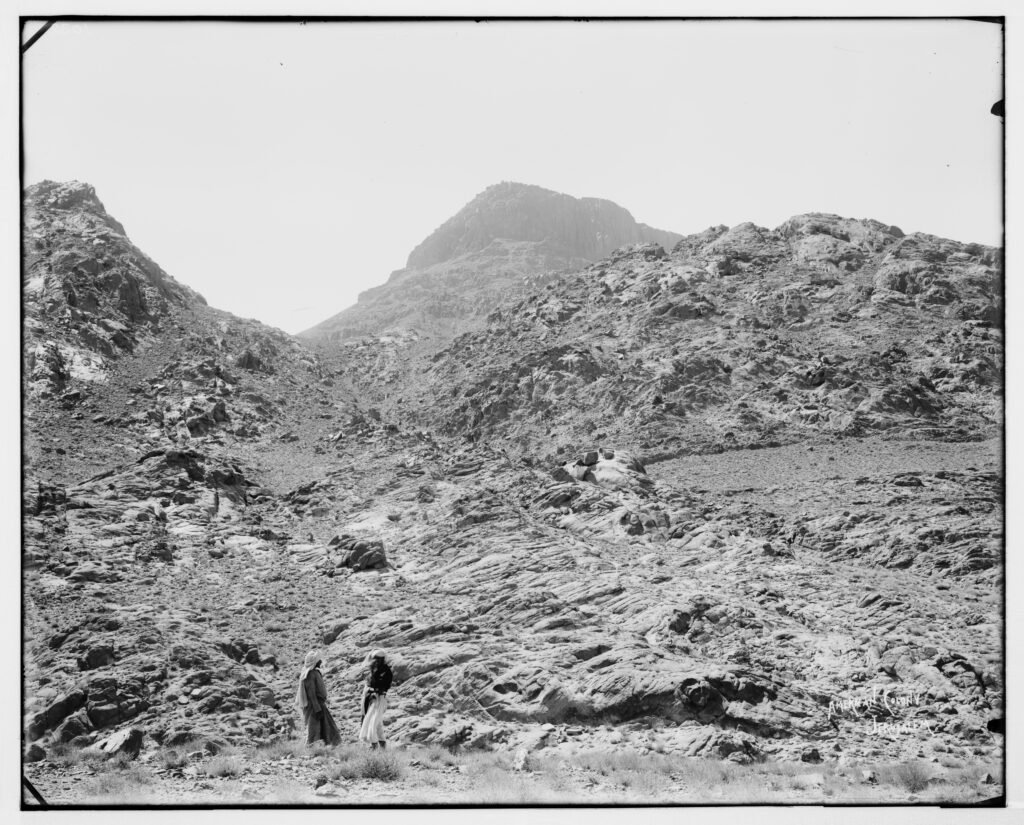
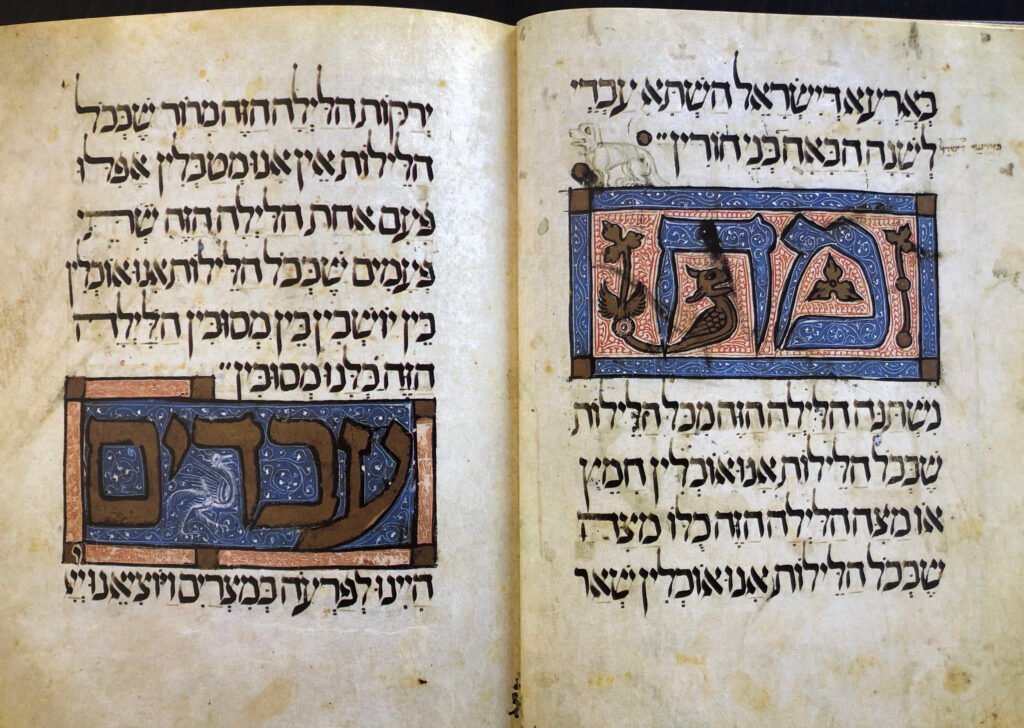
At Sinai, Israel is called an am segulah—a treasured people, a people set apart. The word appears with its own explanation attached, not left to float free: “you shall be to Me a kingdom of priests and a holy nation”—a kingdom, meaning governed; a priesthood, meaning obligated to serve; holy, meaning distinguished by conduct rather than by favor. The covenant that follows is not a certificate. It is six hundred and thirteen specific instructions, binding, enforceable, and entirely one-directional in what they demand.
The prophetic tradition is, if anything, harsher about what election means than a casual reader would expect. Amos does not tell Israel that chosenness protects it. He tells them the opposite: “You only have I known of all the families of the earth; therefore I will punish you for all your iniquities”. Chosenness is not the absence of judgment. It is the guarantee of it. Election in the biblical and rabbinic imagination is a heavier standard applied to a smaller group, not a lighter one.
None of that survives the popular inversion, and the inversion is not hard to find. Joseph Campbell, in Myths to Live By, dismisses the doctrine outright as “the no less troublesome doctrine of a universal God whose eye is on but one Chosen People of all in his created world”—one instance among many that the religious studies scholar Robert Segal has catalogued at length, documenting a pattern Campbell repeats across decades of published work. Jostein Gaarder, the celebrated Norwegian novelist, went further still in a widely read 2006 newspaper piece later examined at length by scholars of the controversy it provoked: “To act as God’s chosen people is not only stupid and arrogant, but a crime against humanity. We call it racism.” Neither man is a fringe figure. Both are respected, mainstream, broadly read—which is precisely the point. The inversion doesn’t live only in the places you’d expect to find contempt. It has fully normalized quarters.
Neither writer argues with Amos. Neither needs to. The word “chosen” arrives at each of them already stripped of everything that made it a burden rather than a boast, and they build their case entirely on what’s missing.
Nowhere and Everywhere
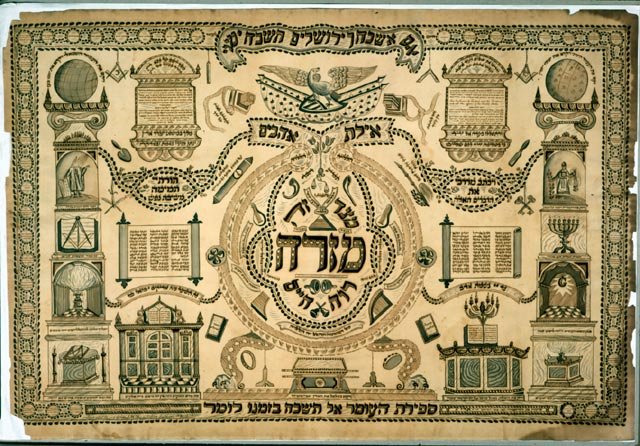
Galut is not a vague sense of homesickness. It is a specific theological category with its own internal logic: displacement as consequence, exile as a condition with an end built into its definition—a structure the Torah itself holds in one breath, scattering and gathering named in the same passage: “I will bring you back… and gather you again from all the peoples”. Displacement and the memory of return are not two different Jewish ideas. They are one idea, load-bearing on both ends—as the Encyclopaedia Judaica’s entry on galut documents at length, defining it as the specifically Jewish conception of a people uprooted from its homeland and yearning for it, not merely dispersed.
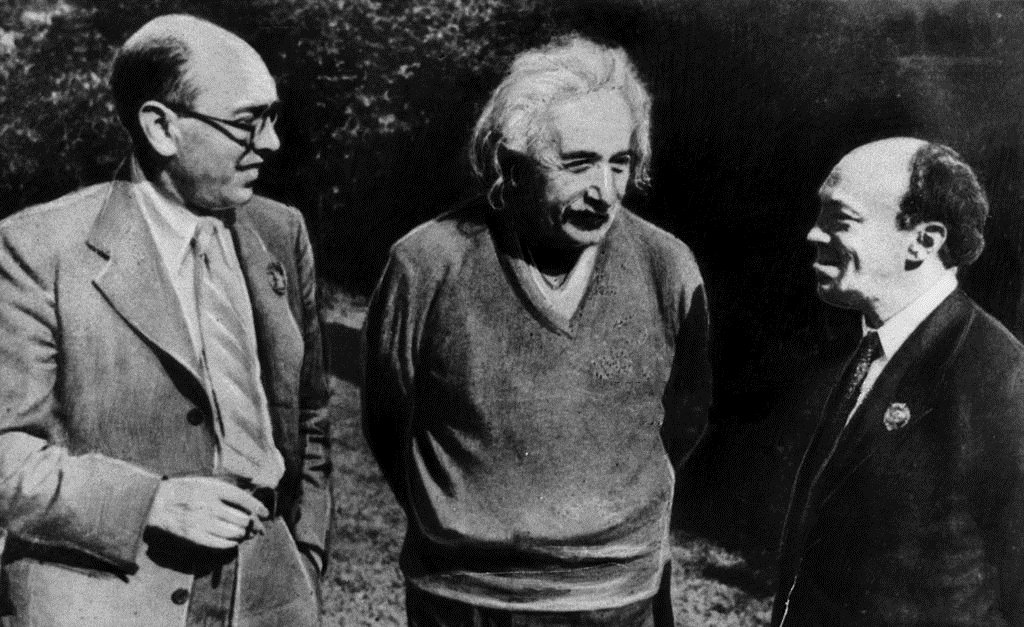
The inversion splits it down the middle and keeps only the first half. Displacement becomes rootlessness, and rootlessness becomes character: a people incapable of genuine attachment to any nation, permanent guests everywhere. The inversion eventually finds an almost perfect political expression in Stalin’s “rootless cosmopolitan” campaign—a 1949 Soviet purge in which, as the YIVO Encyclopedia documents, more than seventy percent of those named in the press were Jewish, their “lack of roots” and “clannishness” made the explicit charge.
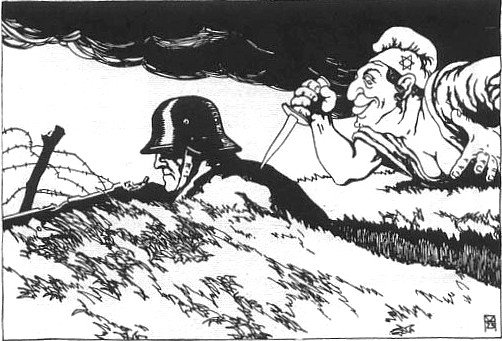
But the mechanism doesn’t stop at rootlessness, and this is where it becomes something closer to a trap than an insult. The second half of galut—the retained attachment to the land displaced from—doesn’t get discarded. It gets inverted separately, into its own accusation: the dual-loyalty charge, still measurably live today—in a recent ADL survey, 39 percent of Americans agreed that Jews are more loyal to Israel than to the United States. Rootlessness and rootedness, the same two halves of the same original idea, become simultaneous and mutually exclusive accusations. There is no configuration of the actual belief that satisfies the inversion, because the inversion was never built to be satisfied. It was built to be unfalsifiable.
A Word That Survived Its Meaning

In the first century, the Perushim were one Jewish movement among several—Pharisees, in the Greek transliteration that has come down to English—distinguished by their attention to oral tradition and their belief in bodily resurrection, a doctrine the Sadducees rejected. Josephus, who studied among them before aligning himself with their school, described their actual standing plainly: they were “very influential among the body of the people,” and “whatever they do about divine worship, prayers, and sacrifices, they perform them according to their direction” (Antiquities 18.11–17). Popular teachers whose rulings ordinary people followed, not the villains of a morality play.
The word did not survive that content. It survived only itself. “Pharisaical”, in contemporary English, is a fully standardized dictionary term—“marked by hypocritical censorious self-righteousness,” a sense recorded since the sixteenth century—and it carries no charge of historical awareness when it’s used. A person can call a colleague “pharisaical” at a dinner party with no idea that a real, specific, historically documented Jewish legal movement once bore that name, no memory that the people being casually insulted were once people whose “direction,” per Josephus, ordinary Jews actually followed. The caricature did not simply outlive the movement it caricatured. It inherited the movement’s name, evicted the tenant, and kept living there.
This is not a plea to rehabilitate the Pharisees, which other pieces in this project have already done the work of. It is narrower and, in some ways, colder than that: watch a Jewish community’s own self-designation get lexicalized into a common adjective, entirely detached from the community, until the adjective is the only thing left standing.
The Word That Escaped

Kabbalah—from the Hebrew kabbalah, “received tradition”—names a real, serious, internally rigorous body of Jewish mystical interpretation, transmitted for centuries through teacher and student, text and commentary. It entered Medieval Latin as cabbala, then French as cabale, and from French into English, where its meaning began to drift almost immediately: not the doctrine itself, but the manner of the doctrine—private, initiated, closed to outsiders. That sense of exclusivity is the hinge. It’s also the last piece of the original meaning to survive the trip.
By the middle of the seventeenth century—and this matters for what follows—the English word “cabal” had already come to mean a small group operating in secret, a political clique, entirely divorced from Kabbalah’s actual content, a sense attested from around 1647 and used in connection with factional politics under Charles I and later Cromwell’s Protectorate. Twenty years after that, in 1667, King Charles II assembled a five-man ministerial council—Clifford, Arlington, Buckingham, Ashley, Lauderdale—whose initials happened, entirely by coincidence, to spell C-A-B-A-L. Merriam-Webster’s own etymology entry states the matter plainly: “these five names are not the source of the word cabal, which was in use decades before Charles II ascended the throne.” The coincidence was noticed, and has often been repeated as an origin story since.

But notice what that repeated, inaccurate story does: it explains the word’s sinister meaning by pointing to five English ministers, and in doing so, quietly erases the word’s actual origin—a serious, specific, Jewish interpretive tradition—and replaces it with an anecdote about a Restoration court that has nothing to do with Jews at all. Even the standard explanation for how this word became sinister has performed the same operation the word itself went on to enable. The mechanism is present in the historiography before it’s present in the antisemitism.
The rest of the trip is short. A word already meaning “secretive plotters” needed only a target, and antisemitic conspiracy culture supplied one. The American Jewish Committee’s own glossary of contemporary antisemitic language documents “cabal” as live usage today—a term for hidden, coordinated Jewish control of world events, still doing exactly the work its Restoration-era sense equipped it to do, aimed now at the community whose word it started as.
An Eye, Repaid
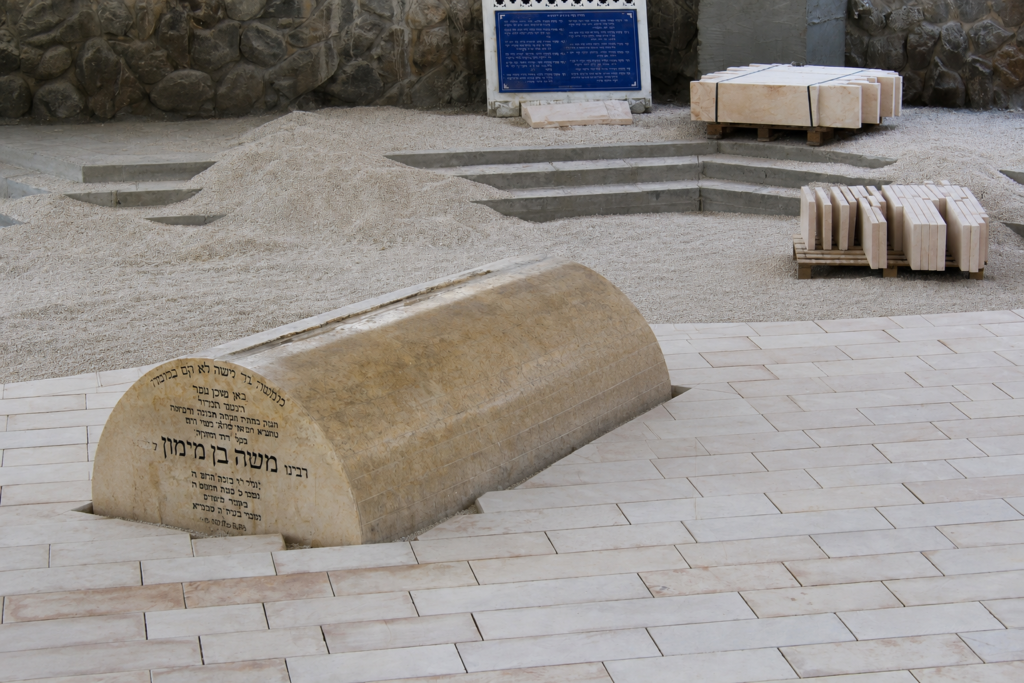
Ayin tachat ayin—an eye in place of an eye—is Torah’s language concerning recompense for bodily injury. It is not, and has never been, within the rabbinic legal tradition, a license for literal retaliation. The Talmud is explicit and detailed on this point: the phrase refers to monetary compensation calculated against the injury caused, not physical repayment in kind. Maimonides later codified the same interpretation as settled law, not one Talmudic opinion among several but the accepted ruling. This is not a modern apologetic reading grafted onto an uncomfortable text. It is the tradition’s own settled, ancient, internally consistent interpretation of its own law.
The inversion doesn’t argue with that interpretation. It doesn’t need to know it exists. It takes the four words in their most superficially literal English translation, discards the interpretive tradition that has always governed their application, and returns the discarded reading as a verdict: this is what Jewish law actually says, primitive and vindictive, a law that a newer, gentler tradition arrived to complete. The reading a legal culture has always given its own text is treated as less authoritative than the reading of someone who has never opened the Talmud page where that culture explains itself.
This is the essay’s plainest statement of the whole mechanism, because here it’s visible without any distortion of the words at all: the outsider’s reading is granted authority over the tradition’s reading of itself. Not “your text says something different than you think.” Something closer and stranger: we will tell you what your text has always meant, and what it means is why you needed us.
Still Moving
None of this belongs only to dictionaries and medieval polemic. The mechanism hasn’t stopped, because the vocabulary hasn’t stopped moving. Tikkun olam—its own meaning already reshaped more than once, from a rabbinic legal phrase to a mystical language of cosmic repair to an American Jewish vocabulary of social action, a transformation traced in detail by Brandeis University’s history of the term—now circulates far outside any of those contexts, shorthand for a Jewish commitment to repairing the world.
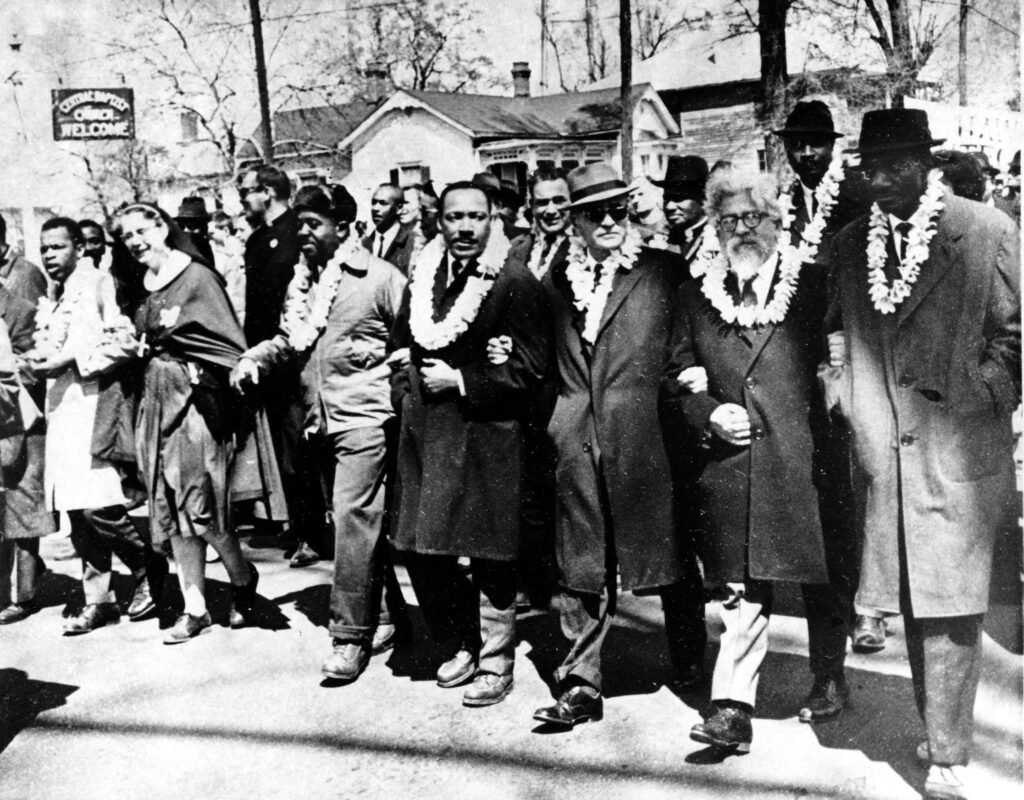
That modern meaning is not counterfeit. That distinction matters. Jewish language has never been frozen, and a tradition that has spent millennia arguing with its own texts cannot object simply because words acquire new meanings. Heschel’s description of marching at Selma—“I felt my legs were praying”—belongs to precisely that living process: inherited religious language finding expression under circumstances its earliest users could not have imagined.
But movement and extraction are not the same thing. One happens while the grammar remains attached; the other begins when the noun can travel without it. Tikkun olam is useful here precisely because we can watch the boundary being crossed in real time. Outside Jewish discourse, it can become little more than a decorative Hebrew synonym for “social justice,” detached from the legal, liturgical, mystical, and communal histories through which it acquired its present meaning. The phrase survives. What surrounds it becomes optional.
And that is the vulnerable moment. A word that travels far enough outside its source eventually starts to answer to whoever is using it. Once that happens, the people who supplied the word become only one constituency among many claiming authority to define it. We already know what can happen next.
False Witness
The noun survives. The grammar does not. And the definition that gets built from the wreckage doesn’t stay in the dictionary—it gets handed back to the people the word came from, and their objection to it counts for less than the authority of whoever built the counterfeit.
There is a commandment about this, inside the very tradition being falsely testified against. Lo ta’aneh v’reiacha ed shaker—you shall not bear false witness against your neighbor. The Ninth Commandment does not specify that the false witness must be invented from nothing. It only requires that it be false, and that it be spoken against your neighbor.
Contempt usually begins by refusing to know its object. This kind begins by learning its name.

Discover more from Many Lamps, One Flame
Subscribe to get the latest posts sent to your email.