
Matthew 9:15–17
“Can the friends of the bridegroom mourn as long as the bridegroom is with them? But the days will come when the bridegroom will be taken away from them, and then they will fast. No one puts a piece of unshrunk cloth on an old garment; for the patch pulls away from the garment, and the tear is made worse. Nor do they put new wine into old wineskins, or else the wineskins break, the wine is spilled, and the wineskins are ruined. But they put new wine into new wineskins, and both are preserved.”
Matthew 9:14–17 (NKJV)
Mark 2:19–22
“Can the friends of the bridegroom fast while the bridegroom is with them? As long as they have the bridegroom with them they cannot fast. But the days will come when the bridegroom will be taken away from them, and then they will fast in those days. No one sews a piece of unshrunk cloth on an old garment; or else the new piece pulls away from the old, and the tear is made worse. And no one puts new wine into old wineskins; or else the new wine bursts the wineskins, the wine is spilled, and the wineskins are ruined. But new wine must be put into new wineskins.”
Mark 2:18–22 (NKJV)
Luke 5:34–39
“No one puts a piece from a new garment on an old one; otherwise the new makes a tear, and also the piece that was taken out of the new does not match the old. And no one puts new wine into old wineskins; or else the new wine will burst the wineskins and be spilled, and the wineskins will be ruined. But new wine must be put into new wineskins, and both are preserved. And no one, having drunk old wine, immediately desires new; for he says, ‘The old is better.’”
Luke 5:33–39 (NKJV)
The question arrives without preamble. Why do the disciples of John fast, and the Pharisees fast, but yours do not? It is a question about practice, not about covenant. About timing, fitness, and capacity—and about what happens when the shefa begins to move through vessels that have stopped being able to move with it.
The Bridegroom Is Here
In the symbolic architecture that Kabbalah would come to name as the union of Tiferet and Malchut—the harmonizing center of the tree joined to the Kingdom, the Shekhinah dwelling in the world—the bridegroom’s presence marks the moment when divine abundance flows freely into the indwelling Kingdom. The channels between the divine and indwelling presence stand open. Tiferet is the groom. Malchut is the bride. Their union is not sentiment; it is the central act of divine transmission, the moment when shefa moves through the tree into creation in ordered abundance.
This is not the moment for the practices of waiting and mourning. You do not fast at a wedding. The friends of the bridegroom cannot mourn while he is present—not because fasting is wrong but because fasting is the practice of a different season. Jesus does not abolish it. He says: the bridegroom will be taken away, and then you will fast again. The old practice returns. But right now the Presence is here, and the wine is being poured. The only question is whether the vessels are ready to receive it.
Cloth and Wineskin: The Mechanics of Living Change
The conventional reading collapses both images into a single argument: old garment equals the old covenant, new cloth equals what follows, incompatibility proves replacement. That reading cannot survive the immediate context—the question was about fasting, not about displacing a covenant—and it cannot survive Luke 5:39. At the sod level, what both images are describing is the mechanics of living transformation meeting fixed form.
The cloth: unshrunk fabric has not yet finished its process of change. Sewn onto a garment whose form is already settled, it contracts—and the contraction tears the old fabric apart. The damage is not caused by malice or defect. It is caused by joining an active process to a structure that cannot move with it.
Luke’s version adds a second movement: no one cuts a piece from a new garment to patch an old one. If you do, you ruin the new garment—and the patch still doesn’t match the old. You cannot selectively harvest from a living movement to service a settled structure. The new is damaged. The old is still unmatched. Both are worse for it.
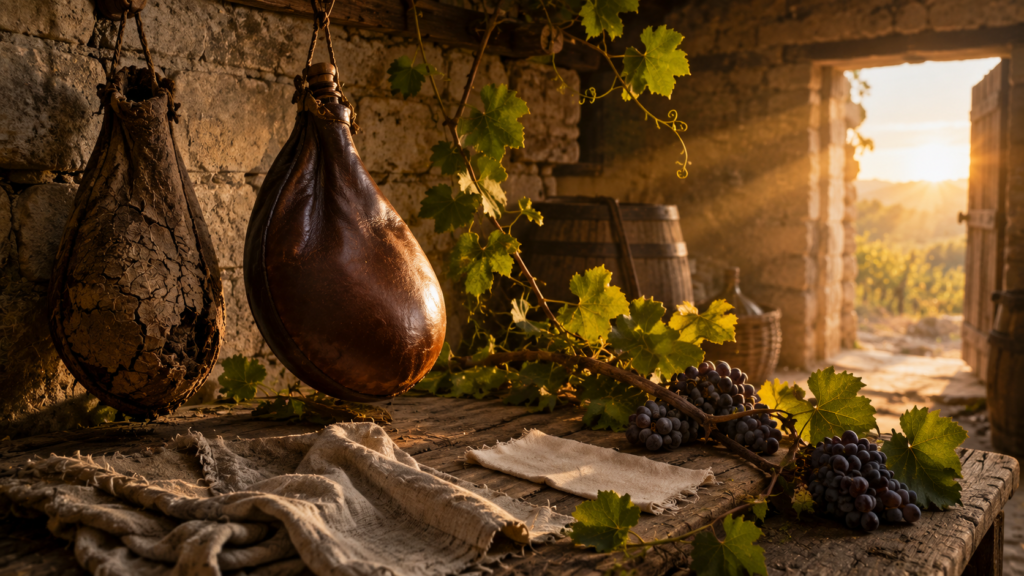
The wine: new wine continues fermenting. It expands. An old wineskin has already stretched to its limit and dried—it has no capacity left to yield. The fermentation doesn’t burst the skin because it lacks an outlet. It bursts because the skin cannot move with what is alive inside it. A new wineskin holds the wine precisely because it remains supple—it stretches under the pressure of living change without breaking.
Two images, two directions: the cloth changes by contraction, the wine by expansion. Both expose the same danger—joining an active process of transformation to a form that has already settled into its final shape.
Torah is not the old garment or the old wineskin. Torah is the pedagogy that produces vessels still capable of expansion. It teaches. Over time, the student grows. The practitioner formed by a lifetime of Torah discipline is not the same person who first entered its discipline—not because the discipline was wrong but because formation has done its work. Torah does not become obsolete. It does exactly what it was designed to do: it forms vessels capable of receiving and transmitting shefa, vessels whose formation has not ended, made supple enough by discipline to stretch further when the divine flow presses outward from within.
The new wineskin is not a superior replacement for the old. It is the vessel whose formation has not finished—the one that has not mistaken yesterday’s faithful shape for the only shape faithfulness may ever take.
The Old Wine Is Good
Luke 5:39 is the verse the conventional reading cannot use, so it quietly sets it aside.
“And no one, having drunk old wine, immediately desires new; for he says, ‘The old is better.’”
This is not concession. It is compassion—and it preserves a distinction the other images leave implicit.
The old wine’s maturity is a virtue. The old skin’s rigidity is a limitation. These are not the same thing.
Age is not the problem. Settledness is not inherently the problem. The problem is asking a vessel whose capacity for movement has ended to contain something still actively becoming.
Of course the old wine is good. The practices of fasting and prayer that have formed John’s disciples and the Pharisees are good. Nobody who has been genuinely shaped by a living tradition should feel ashamed of preferring what has already worked. The resistance to further growth is not stupidity or stubbornness. It is the entirely natural preference for what has already formed you—for the vintage that has already done its fermenting and settled into something reliable and known.
Jesus diagnoses without condemning. He names the pull of the familiar without calling it failure. Luke may be deliberately refusing the binary of old bad and new good: the old wine may indeed be better; the new wine still requires a new skin. The question is not which age is morally superior. It is which vessel fits which movement—and whether formation has left room for further formation, whether the vessel has capacity still to expand, or whether it has stretched to its limit and sealed.
Discipleship as Transmission
The wineskin image concerns reception and capacity. Discipleship carries the argument one step further.
Tiferet flows into Malchut. The groom is present. The shefa moves through the channels of the tree into the indwelling Kingdom. Divine abundance becomes more than information in the disciple. Just as Hochmah and Binah become what Kabbalah calls Da’at—not simply knowledge, but understanding made into lived reality—so the Kingdom becomes not merely understood but inhabited.
The friends of the bridegroom are not the principals in the union, but neither are they detached observers. They receive its joy, bear witness to it, and carry the abundance of the feast beyond the wedding chamber. What flows through the vessel is not given for holding. The disciple who has been formed by Torah into a vessel capable of receiving what the bridegroom’s presence makes available is formed for a purpose: to raise others up as they themselves have been raised. To become, in their own person, the new wineskin at the moment the wine is poured—supple, yielding, capable of holding what is alive, and of passing it on.
This is what Jesus is asking of his disciples when the shefa is moving freely. Not to preserve what they have received. Not to seal themselves against further growth. But to remain formable—and in remaining formable, to become the vessels through which the Kingdom continues to move into the world.
What the New Wineskin Holds
The old wine is good. The old garment served faithfully. The practices of waiting and mourning have their season, and that season will return when the bridegroom is taken away.
But right now the Presence is here. The shefa moves through channels opened by the union of Tiferet and Malchut at an intensity only a vessel still capable of expanding can receive without breaking. The new wineskin is not a superior replacement for the old. It is the vessel that formation has kept supple—the one that has not confused the shape it held yesterday with the only shape it may ever hold.
The tradition proves that it has formed you well not when it has made further change impossible, but when it has made you supple enough to receive what fidelity requires next. The Kingdom does not arrive to be stored in forms that have finished their changing. It arrives as living movement, pressing outward from within—and only the form still capable of moving with it can receive it without violence, carry it without breaking, and pass it on.

Discover more from Many Lamps, One Flame
Subscribe to get the latest posts sent to your email.