
The story most people know begins with hostility.
It does not.
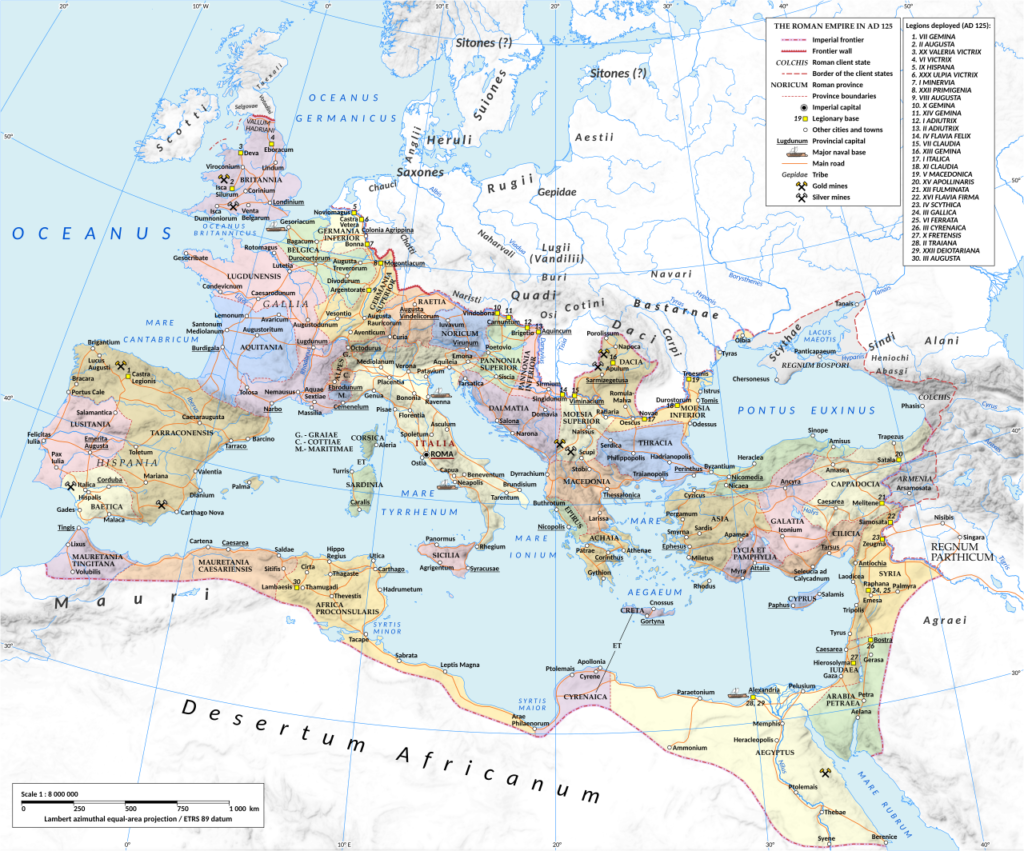
In the decades before the common era, Julius Caesar extended specific legal protections to Jewish communities throughout the Roman world. The grants are documented in detail by Josephus in his Antiquities of the Jews: the right to maintain synagogues, exemptions from certain civic obligations incompatible with Sabbath observance, the right to collect the Temple tax from diaspora communities and transmit it to Jerusalem. These were not acts of sentiment toward an admired minority. They were acts of administration toward a useful one. The Jewish diaspora—dispersed throughout the Mediterranean basin, comprising perhaps one in ten residents of the empire at its peak—represented a network with its own civic infrastructure, its own internal administrative capacity, its own means of organizing and maintaining coherent communities across vast distances. Rome recognized utility and protected it accordingly.
Augustus confirmed and in some cases extended Caesar’s grants. The Jewish community was, for a period, a protected constituency of the empire—not beloved, not fully trusted, but functional within the Roman order and legally shielded within it. Philo of Alexandria, writing in the first century CE, describes Jewish communities throughout the Mediterranean that had built their lives inside this accommodation: synagogues functioning as community centers and courts, the Sabbath observed without interference, the Temple tax flowing annually from Alexandria, from Antioch, from Rome itself, to Jerusalem.
That baseline matters. What follows is not the revelation of a contempt that was always there. It is the construction of one.
The Accommodation
The Jewish population of the Roman Empire at its height was not a marginal community. Estimates drawn from ancient demographic records and modern scholarship place the Jewish population of the empire at somewhere between four and eight million people—a massive, self-governing constituency within a state of perhaps fifty to sixty million. They lived not only in Judaea but throughout the Mediterranean world: in Alexandria, in Antioch, in Rome itself, in communities across Asia Minor, Greece, and North Africa. They were merchants, artisans, scholars, and administrators. They maintained their own legal institutions, their own communal structures, their own networks of communication and mutual obligation.
This is what Caesar saw when he extended his protections: not a small and exotic sect requiring charity, but a coherent and administratively capable population whose internal networks could be useful to an empire that needed to govern vast territories through local intermediaries. The practical logic ran both directions. Rome’s protection gave Jewish communities legal standing and security. The communities’ internal organization and discipline gave Rome a population that largely governed itself.
Josephus, in the Antiquities, preserves the actual decrees—the senatorial and imperial edicts that established and confirmed these protections across successive administrations. They are specific documents, not vague gestures. They name particular rights, particular exemptions, particular communities. The accommodation was real, it was legally grounded, and it lasted for generations.
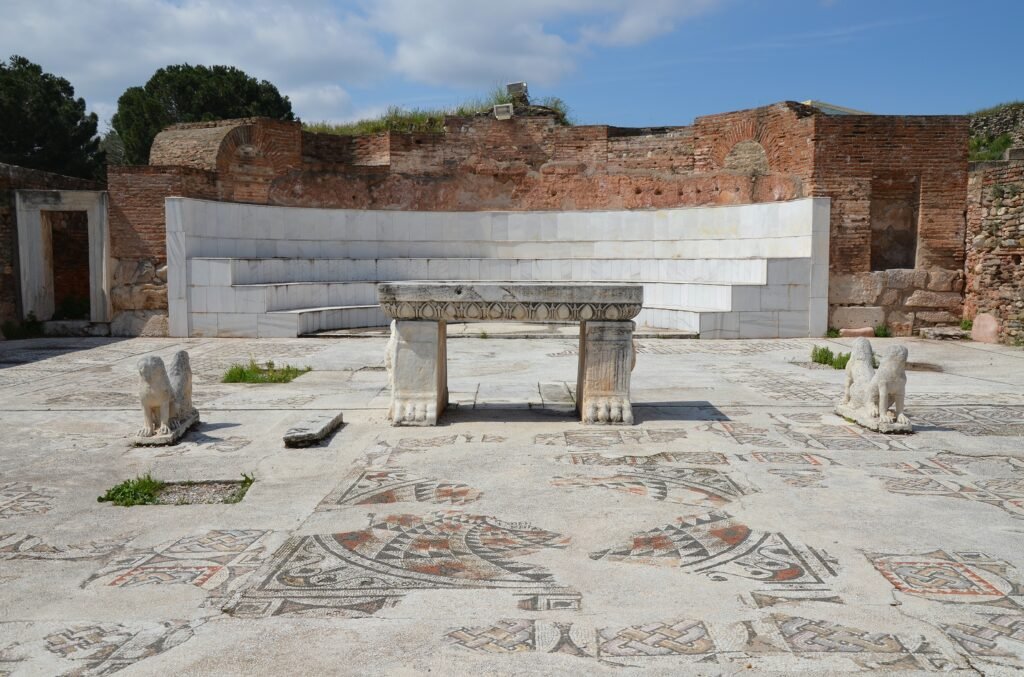
What that integration actually looked like is still visible at Sardis, in western Turkey, where one of the largest synagogues in the ancient diaspora world has been excavated. The Sardis synagogue was not built on the margins of the city. It was built inside the gymnasium complex—the same complex that housed the city’s athletic and educational facilities, the very center of Hellenistic civic identity. A marble apse. Lion sculptures flanking the Torah table. Mosaic floors bearing the names of donors who held Roman citizenship alongside their Jewish identity. This is not a community hiding in the shadows of Roman civilization. It is a community building inside it.
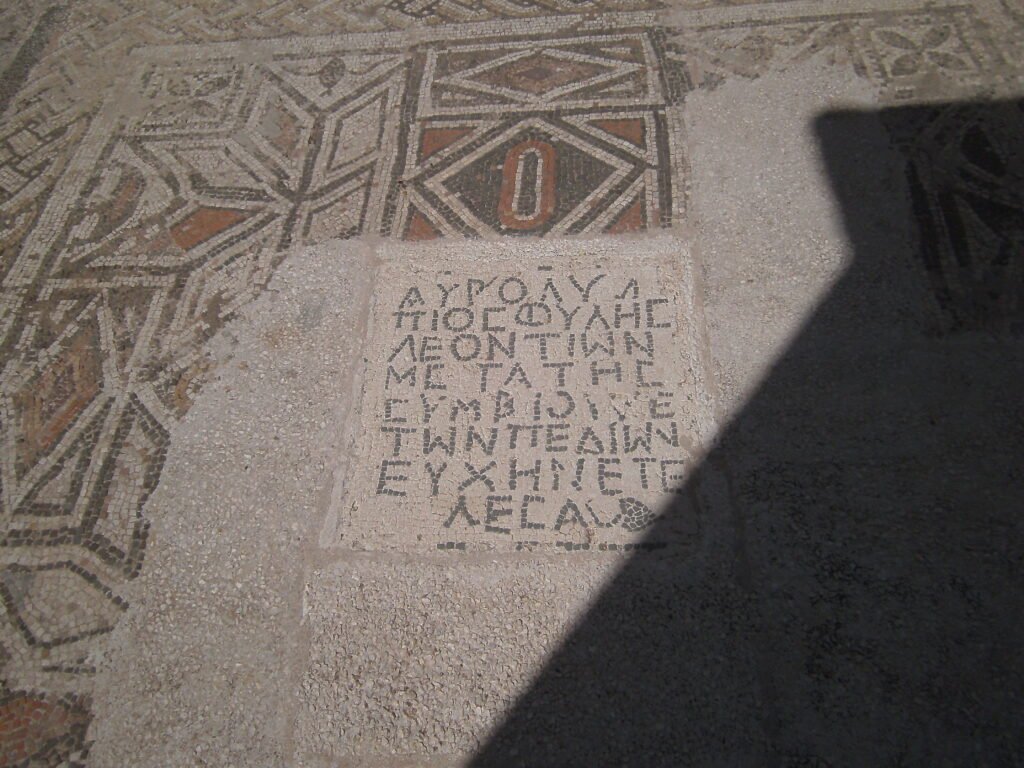
One of the floor mosaics at Sardis records a donor named Aurelius Leontios—Aurelius marking him as a Roman citizen, Leontios a Greek name common in diaspora Jewish communities, and the inscription recording the fulfillment of a vow alongside his wife and children. A Jewish family. Roman citizens. Practicing their faith. Building their community inside the administrative and civic structure of the empire that protected them. This is what the accommodation looked like from the inside.
It was not permanent.
The Erosion
Rome was not a single personality. Caesar’s protections did not bind Tiberius. Augustus’s tolerance did not obligate Caligula. Administrations changed. Institutions remembered.
The erosion was not sudden and it was not primarily ideological. It was administrative and economic. Heavy taxation across the empire’s peripheries created friction everywhere Rome governed distant territories, and Judaea was among the most friction-prone. The procurators appointed to govern the province ranged from incompetent to deliberately provocative. Josephus documents this pattern in both the Jewish War and the Antiquities with the precision of a witness who understood the stakes: Pilate displaying Roman standards in Jerusalem in calculated violation of Jewish practice; Florus confiscating funds from the Temple treasury; soldiers mocking pilgrims and provoking riots that then required suppression.
Each incident was local. Together they formed a pattern.
Tiberius expelled Jews from Rome in 19 CE—recorded by Tacitus in the Annals, by Suetonius in the Lives of the Twelve Caesars, and by Josephus. Claudius issued a later expulsion order, referenced in Acts 18:2 and confirmed by Suetonius. Caligula demanded that his statue be installed in the Temple—the crisis documented in extraordinary detail by Philo of Alexandria in his Legatio ad Gaium, a firsthand account of the Jewish delegation that traveled to Rome to plead against the order. The crisis was resolved only by Caligula’s assassination and the deliberate delay of the Syrian legate Petronius, who understood that enforcing the order would produce an uprising Rome was not prepared to suppress.
None of these incidents, taken alone, constituted a policy. Together they traced the arc of a relationship deteriorating under the weight of mutual incomprehension and administrative convenience. The literary contempt that had been circulating for centuries—the misanthropia charge, the accusation of cosmic disloyalty, the reading of Jewish separateness as hostility to humanity—did not cause this deterioration. But it provided the vocabulary that made the deterioration legible. When Roman administrators needed to explain why this particular community was difficult, why its exemptions were burdensome, why its resistance to Hellenization was intractable, the charges were already there, already articulated, already available as explanation.
Once a governing system begins categorizing a community collectively as a problem, the label hardens and becomes self-confirming. Individual loyalty, individual behavior, individual circumstance become irrelevant to the apparatus. The community becomes an abstraction—the Jews—and every subsequent conflict confirms the category. This is not ideology. It is bureaucratic habit. And bureaucratic habit is extraordinarily durable.
The Wars
The Great Revolt began in 66 CE. Its causes were multiple and documented: the accumulated weight of taxation, procuratorial provocation, factional violence within Judaea itself, the catastrophic underestimation of what Roman legions would do when finally committed to suppression. Our primary record is Josephus’s Jewish War—a text whose authorial position is itself a document of the mechanism this piece has been tracing.
Josephus was born Yosef ben Matityahu, a Jewish priest and military commander. He led the defense of Galilee during the early stages of the revolt. When his position collapsed and most of his men chose death over surrender, Josephus surrendered to the Roman general Vespasian. He interpreted a dream—or said he did—as prophesying that Vespasian would become emperor. When Vespasian did become emperor, Josephus was freed, took the family name Flavius, became a Roman citizen, and spent the rest of his life writing history under Flavian patronage in Rome. The Jewish War was written under the auspices of the dynasty that had destroyed the Temple and the community Josephus had once fought to defend. His ink was paid for by the destroyers.
That does not make the history false—Josephus was a careful and generally reliable historian, and his account is corroborated at many points by archaeology and by Roman sources. But his position illuminates exactly the impossible navigation that collective categorization creates for individuals caught inside it: survival within the apparatus that crushed your community requires becoming useful to it.
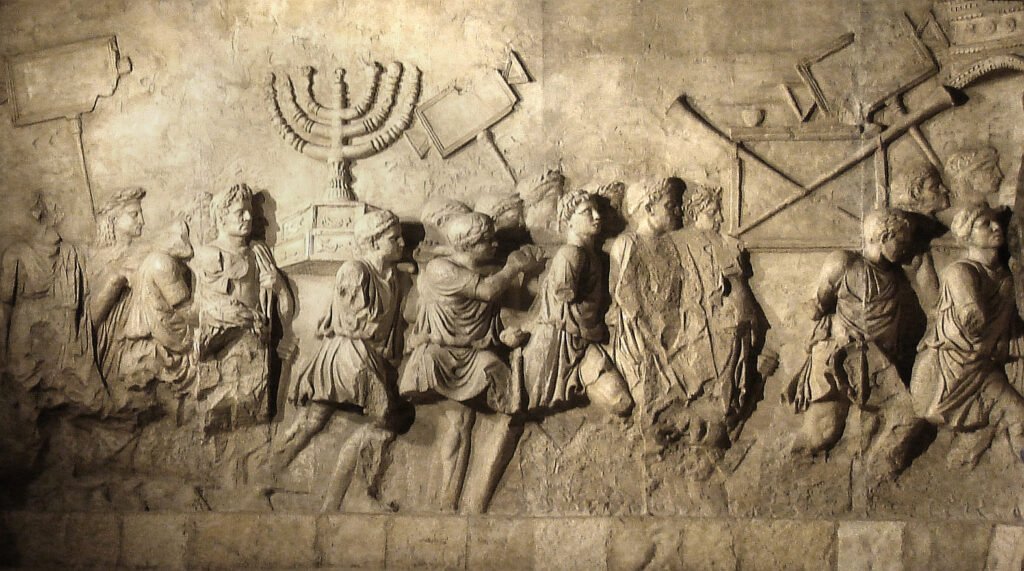
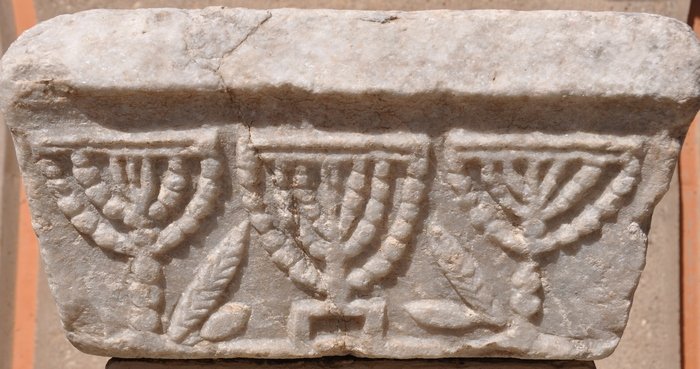
The revolt ended in 73 CE with the fall of Masada. The Temple had been destroyed three years earlier, in 70 CE. Titus returned to Rome in triumph. The procession through the streets—documented on the Arch of Titus—carried the Temple’s sacred objects through the city: the menorah, the silver trumpets, the Table of Shewbread. The holiest objects of Jewish worship displayed as trophies of Roman military victory, permanently carved in stone at the entrance to the Roman Forum.
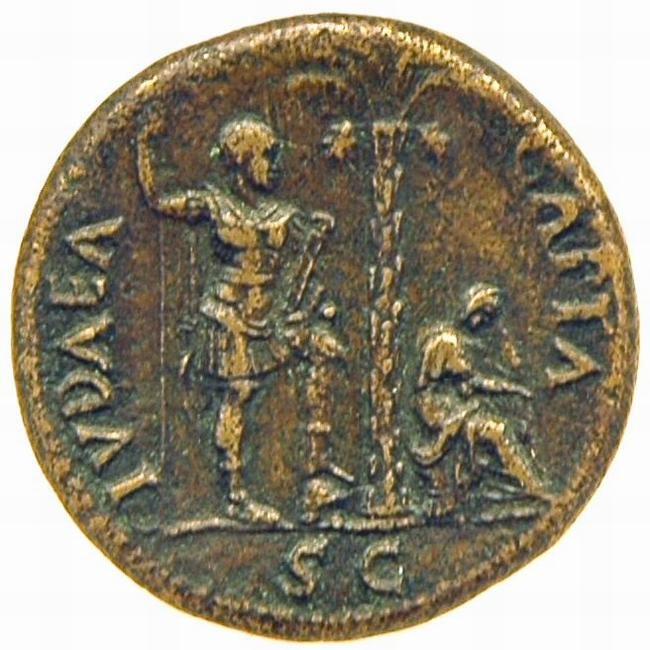
Vespasian minted a coin. On one side, his imperial portrait. On the other, a Roman soldier standing triumphant over a woman—the personification of Judaea—who sits in mourning, her head bowed. The legend reads JUDAEA CAPTA. Judaea conquered. The coin circulated throughout the empire. Every transaction that passed through it carried the declaration: this is what Judaea is now. Not a community of citizens with legal protections. A defeated category.
Then came the paperwork.
The fiscus Judaicus—the Jewish tax—redirected the annual contribution that Jews throughout the empire had voluntarily sent to the Temple in Jerusalem and made it a compulsory levy payable instead to the temple of Jupiter Capitolinus in Rome. Every Jew in the empire, whether or not they had any connection to the revolt, whether they lived in Alexandria or Antioch or Rome itself, paid it annually. Contempt no longer required emotion, or soldiers, or fire. It required a ledger entry. That is a different kind of durable.
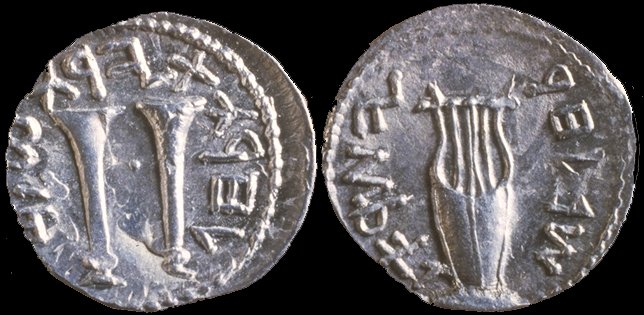
Bar Kokhba. 132–135 CE. The Second Jewish-Roman War, the scale of which Cassius Dio records with unusual specificity: fifty fortresses taken, nearly a thousand villages destroyed, hundreds of thousands killed. Hadrian’s response was decisive and administrative. Jerusalem was rebuilt as Aelia Capitolina—a Roman city on the site of the destroyed Jewish one, with a temple to Jupiter where the Temple had stood. Jews were forbidden to enter on pain of death. And the province was renamed.
Judaea became Syria Palaestina.
The name Palaestina derived from the Philistines—Israel’s ancient enemies, a people who had ceased to exist as a distinct culture for centuries. Hadrian stamped their name over the map where Judaea had stood. This was not a military decision. It was an administrative one: the deliberate erasure of a people’s geographic and historical identity by imperial decree. The name Judaea—the name from which Jews took their name—was removed from the official cartography of the empire. Administratively speaking, Rome was asserting that this place had always been something else.
A geographical lobotomy, performed with paperwork.
The Administrative Inheritance
By 135 CE, Rome had not merely defeated two revolts. It had developed something that did not exist when Julius Caesar extended his protections to Jewish communities a century and a half earlier: a complete institutional framework of collective categorization. Legal categories, fiscal mechanisms, provincial nomenclature, monumental architecture. The contempt was no longer literary or ambient. It was written into tax law, stamped onto coins, carved into triumphal arches, embedded in the official name of a province.
The literary tradition had not caused this. Manetho’s rewriting of the Exodus, Apion’s accusations, Tacitus’s misanthropia charge—these were the vocabulary, not the mechanism. They explained the contempt after the fact, gave it intellectual respectability, made it legible to educated Romans who needed a framework for understanding why this community was so intractable. The mechanism was administrative: the accumulated institutional habit of treating Jews collectively, of applying a single categorical label to a diverse population across the entire empire, of encoding that categorization into law and infrastructure.
The two currents—literary contempt and administrative categorization—had been feeding each other for a century. By the time Hadrian renamed the province, they were inseparable.
Into this, Christianity emerged. Not into a neutral empire. Not into a tolerant Rome that had not yet developed its posture toward Jews. Into an empire that had spent a century and a half building the legal categories, the fiscal mechanisms, the institutional habits of treating Jews as a collectively problematic population. The framework was already in place. The vocabulary was already available.
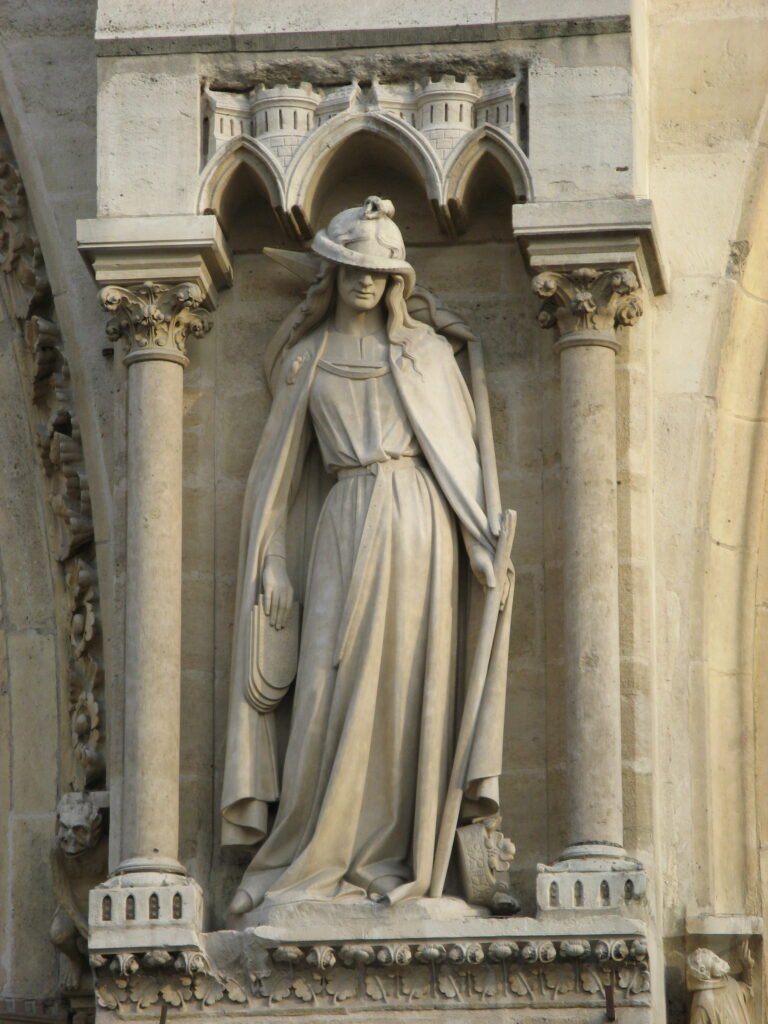
A sect that had fractured from within Judaism, operating across communities that developed at different speeds and under different pressures, found itself navigating that framework from its earliest decades. Needing Rome’s goodwill to survive, many early Christian communities could not afford association with the people Rome had spent a century crushing—and for some, distancing themselves from Jewish identity was not only theological but political. The Roman categories were already there, already functioning, already shaping how the empire read any movement with Jewish roots.
Two currents, flowing from different sources, finding the same channel.
The categories were already there, waiting to be theologized.

Discover more from Many Lamps, One Flame
Subscribe to get the latest posts sent to your email.