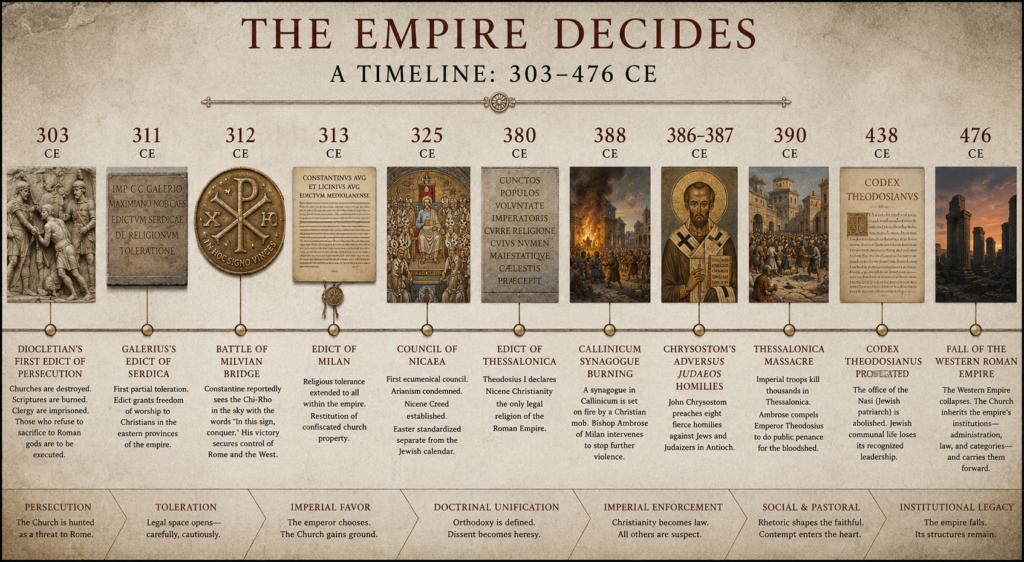
303 CE. Diocletian issues the first of four edicts ordering the persecution of Christians throughout the Roman Empire. Churches are to be destroyed. Scriptures are to be burned. Clergy are to be imprisoned. Those who refuse to sacrifice to Roman gods are to be executed.
313 CE. Constantine and Licinius issue the Edict of Milan, extending religious tolerance to all within the empire.
One decade.
The most systematic persecution of Christians in Roman history to full legal tolerance—in the span of ten years. Someone who watched churches burn under Diocletian could have lived to see Constantine fund the construction of new ones.
For the Jewish community, Diocletian’s edicts changed nothing directly. Jews were not Christians. The persecution was aimed specifically at those who refused to sacrifice to Roman gods—a category that technically included Jews, who had long held a religio licita exemption from that requirement. Roman administrative habit, already well established, left the Jewish community in its familiar position: contained, taxed, restricted, but not actively hunted. The fires of 303 CE were not Jewish fires. What was coming for the Jewish community would arrive by a different mechanism entirely—not the edict of a pagan emperor persecuting a rival religion, but the architecture of a Christian empire defining itself.
The Edict and What It Actually Said
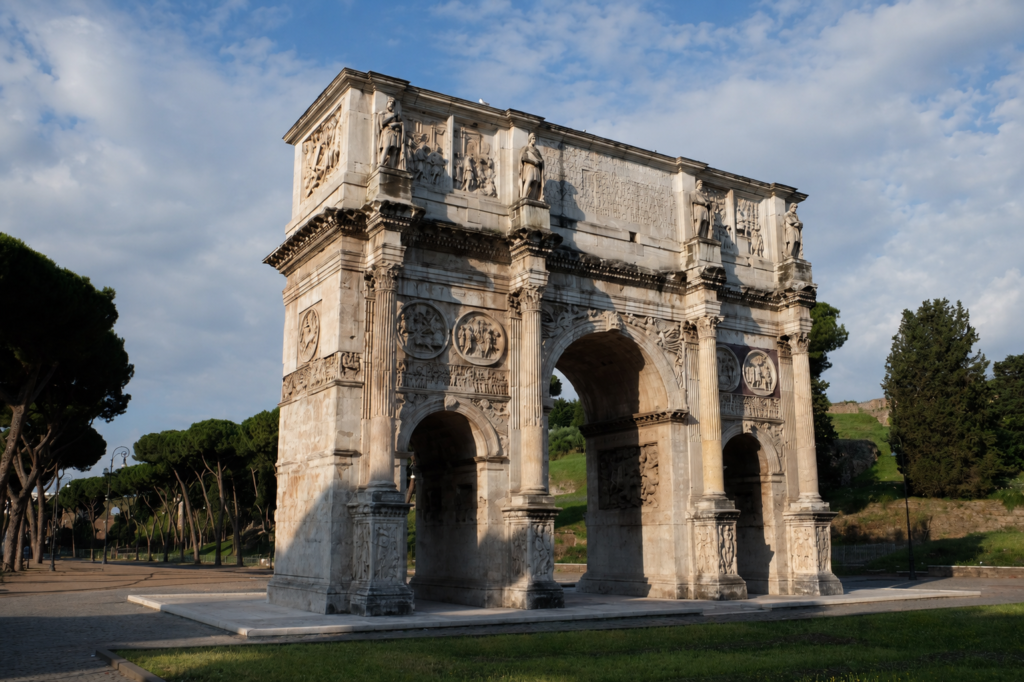
The Edict of Milan is widely remembered as the moment Christianity became Rome’s official religion. It is not. What Constantine and Licinius declared at Milan in 313 CE was religious tolerance—for all. The edict restored confiscated church property, yes. But it extended the same principle of toleration to every religion within the empire. Constantine himself remained theologically ambiguous for years after Milan. His coins continued to carry Sol Invictus—the Unconquered Sun—alongside Christian imagery well into his reign. The famous vision before the Battle of Milvian Bridge is reported differently by different sources, and what it meant to Constantine personally remains genuinely contested among historians.
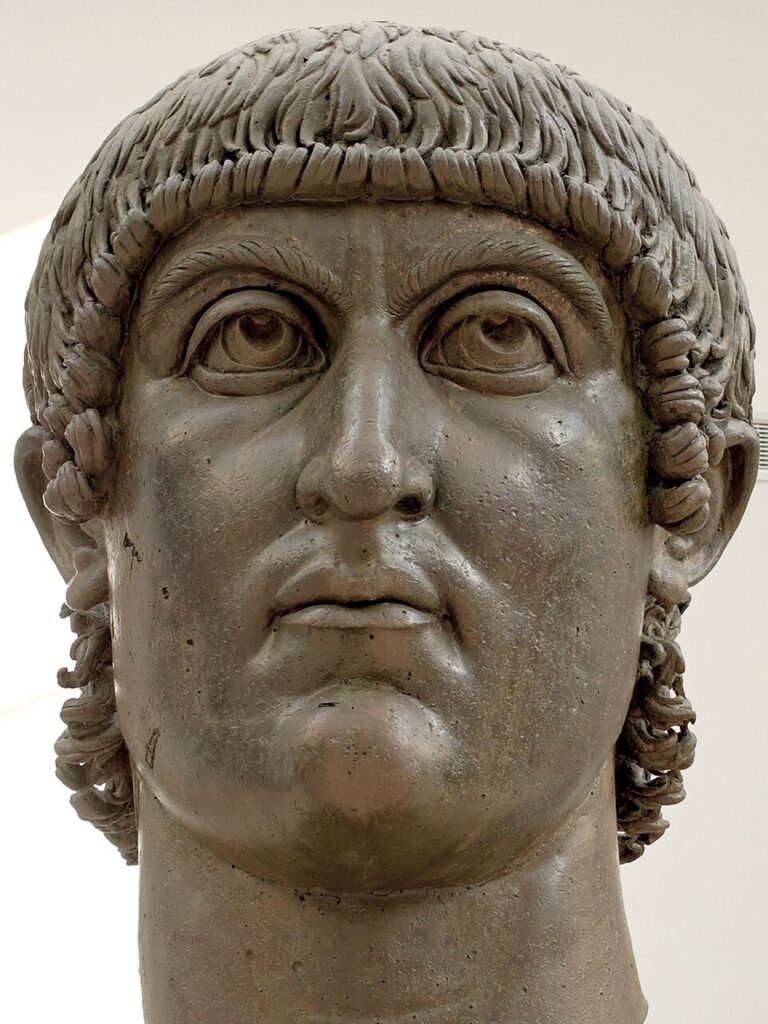
What is not contested: Constantine favored Christianity. He exempted clergy from civic obligations. He funded church construction. He involved himself directly in theological disputes—intervening in the Donatist controversy in North Africa before Nicaea, then convening Nicaea itself. He presided at the council, though he had not yet been baptized. The Edict of Milan opened the door. What Constantine did in the years following made clear which institution he expected to walk through it.
For Judaism, the Edict of Milan is not immediately alarming. Jews have been a religio licita—a permitted religion—for centuries. Tolerance, even imperial favor extended to a rival tradition, is navigable territory. What is not yet visible in 313 CE is how quickly the terrain will shift.
Nicaea and the Speed of Consolidation (325 CE)
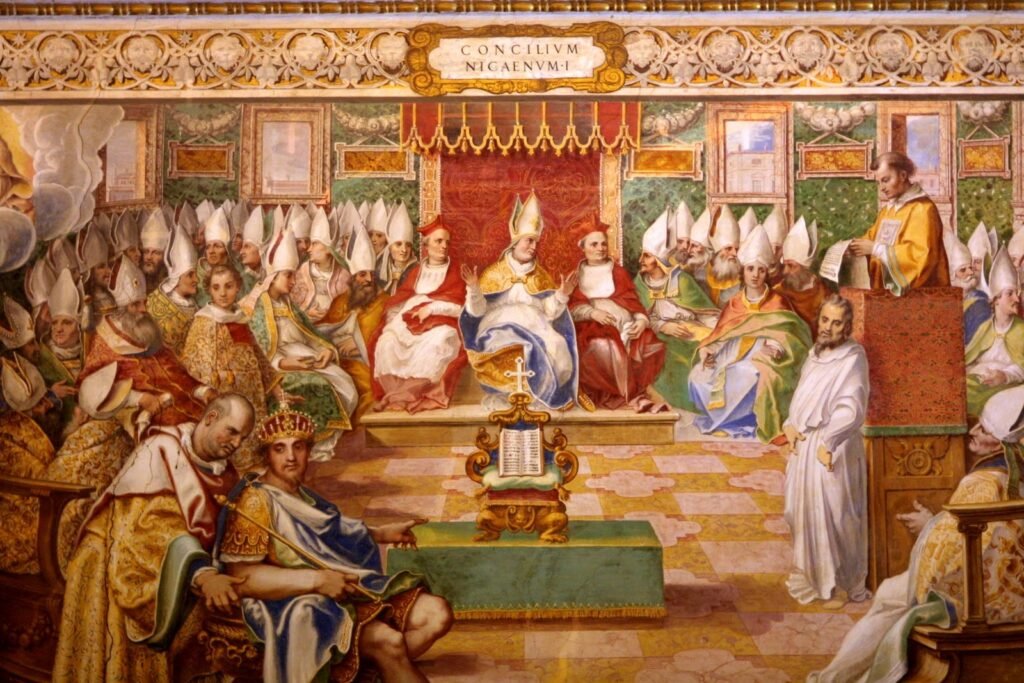
Twelve years after the Edict of Milan, Constantine convenes the first ecumenical council at Nicaea, in what is now northwestern Turkey. Bishops from across the empire gather—perhaps 250 to 300 of them—to resolve the Arian controversy. Arius, a priest from Alexandria, had been teaching that the Son of G-d was a created being, subordinate to and distinct from the Father. His opponents, led by Athanasius, insisted the Son was of the same substance—homoousios—as the Father. The distinction seems technical. Its consequences were not.
Nicaea condemns Arianism and produces the Nicene Creed—the first universal statement of Christian doctrine, binding on all churches within the empire. Those who refuse to sign are exiled. Orthodoxy had existed as an aspiration since the first century of Christian communities arguing over correct belief. What Nicaea does is make orthodoxy enforceable. There is now a correct answer, backed by imperial authority, with consequences for those who answer otherwise.
Before Nicaea, there are Christianities.
After Nicaea, there is orthodoxy—and everything else.
Nicaea also standardizes the calculation of Easter—specifically, deliberately, in a manner that severs it from the Jewish Passover calendar. Constantine’s letter on the matter, preserved by Eusebius of Caesarea, makes the motivation explicit: it is unseemly to follow the practice of the Jews in the computation of this holy festival. The first ecumenical council of Christianity defines one of its central liturgical practices specifically in opposition to Jewish practice. The theological program of the previous two centuries—the insistence on Christian distinctness from Judaism—is now encoded into universal Church law by imperial authority.
The deeper significance of Nicaea is organizational rather than doctrinal. It establishes the machinery by which Christianity will spread: a defined creed, a hierarchy of bishops, a council process for resolving disputes, and the emperor’s weight behind every decision. Christianity has always carried within it a missionary mandate—from Jesus addressing the crowds, through the commissioning of the apostles, through Paul’s Gentile mission across the Mediterranean. The impulse to universalize is structural, not incidental. What Nicaea does is give that impulse institutional infrastructure and imperial backing.
Judaism accepted converts and at various points in antiquity attracted significant numbers of them. But it was not organized around universal mission in the way Christianity became after Nicaea. The covenant is particular, demanding, and not designed for universal export. Against a standardized, imperially backed missionary faith with defined doctrine and a council process for enforcing it, that structural difference becomes a strategic liability of historic consequence.
Theodosius and the Codex (380-438 CE)
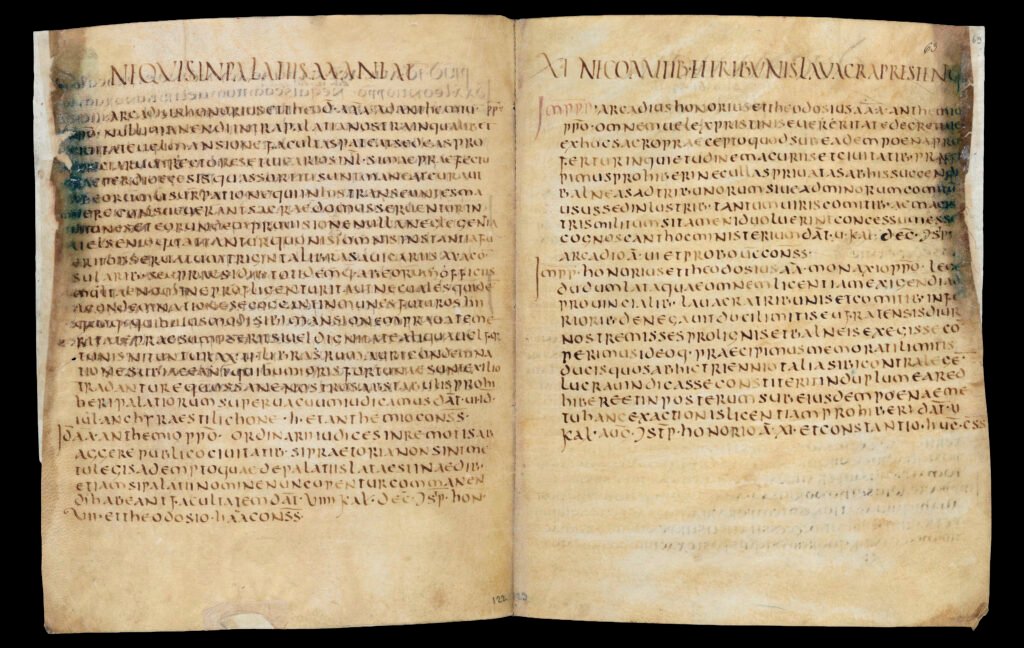
380 CE. Theodosius I issues the Edict of Thessalonica, declaring Nicene Christianity the official state religion of the Roman Empire and requiring all subjects to profess it. Its language is precise and pitiless: those who do not conform to Nicene doctrine are to be considered practitioners of extravagant madness, subject to divine punishment and imperial justice. The legal suppression of rival traditions—pagan, heretical, and eventually any that competed with Nicene orthodoxy—would unfold through subsequent legislation across the decades that followed. The direction, from 380 CE onward, is unambiguous.
Sixty-seven years from the Edict of Milan. One long human lifetime. Someone born the year Constantine extended tolerance could have lived to hear Theodosius make Christianity mandatory.
The Codex Theodosianus—the systematic compilation of imperial law completed under Theodosius II in 438 CE—encodes the accumulated legal degradation of Jewish communal life into a single authoritative text. Jews are barred from holding public office, from military service, from building new synagogues, from owning Christian slaves, from marrying Christians, from accepting converts under penalty of death. The Jewish patriarchate—the office of the Nasi, the recognized leadership structure that had given Jewish communal life its legal framework since Yavneh—is abolished in 429 CE, leaving the community without the institutional representative that had negotiated its standing with Rome for three centuries.
The fiscus Judaicus, the collective punishment tax imposed after the destruction of the Temple in 70 CE, continues. The provincial renaming that erased Judaea from the map after Bar Kokhba stands. And now layered on top of the Roman administrative framework that had categorized, contained, and taxed the Jewish community for three centuries comes Christian theological justification. Jewish existence is not merely administratively inconvenient. It is theologically problematic—the ongoing presence of the people who rejected the Messiah, whose suffering the Church fathers had interpreted as divine confirmation of that rejection.
Roman administrative categorization, built through the wars of 66–135 CE, now carries Christian theological grounding. The theological program, built through two centuries of patristic construction, now has Roman legal enforcement. Together they produce something neither could have generated alone: a civilization-wide architecture of contempt, legally encoded, theologically grounded, administratively enforceable, and institutionally durable.
The legal architecture being constructed around Jewish communities was not merely passive. It was actively shaped by ecclesiastical pressure—and what that pressure could accomplish became clear in 388 CE, two years before the Thessalonica massacre that would test the limits of episcopal authority in the other direction. A Christian mob in Callinicum, a city on the Euphrates, burned the local synagogue to the ground—led, according to the historical record, by the local bishop and monks. Theodosius issued an order requiring the perpetrators to be punished and the synagogue rebuilt at the bishop’s expense. Ambrose of Milan intervened immediately. In his Epistola 40, addressed directly to the emperor, he argued that compelling a bishop to rebuild a synagogue would make that bishop a traitor to his faith—that the bishop’s only alternatives were apostasy or martyrdom. He declared that he himself wished all synagogues destroyed, that they were homes of perfidy and impiety in which Christ was daily blasphemed. He added, almost in passing, that G-d had already saved him the trouble in Milan, where the synagogue had been struck by lightning. He threatened to withhold the Eucharist from Theodosius if the order stood.
Theodosius backed down.
The synagogue was not rebuilt. The perpetrators went unpunished. What the incident reveals is not simply that a bishop could override an emperor on Jewish matters—it reveals what the legal architecture would and would not protect. Imperial law, at least in principle, had required the synagogue to be rebuilt. Episcopal authority had intervened to prevent it. The Jewish community of Callinicum had no recourse within either jurisdiction.
The Voice From the Pulpit
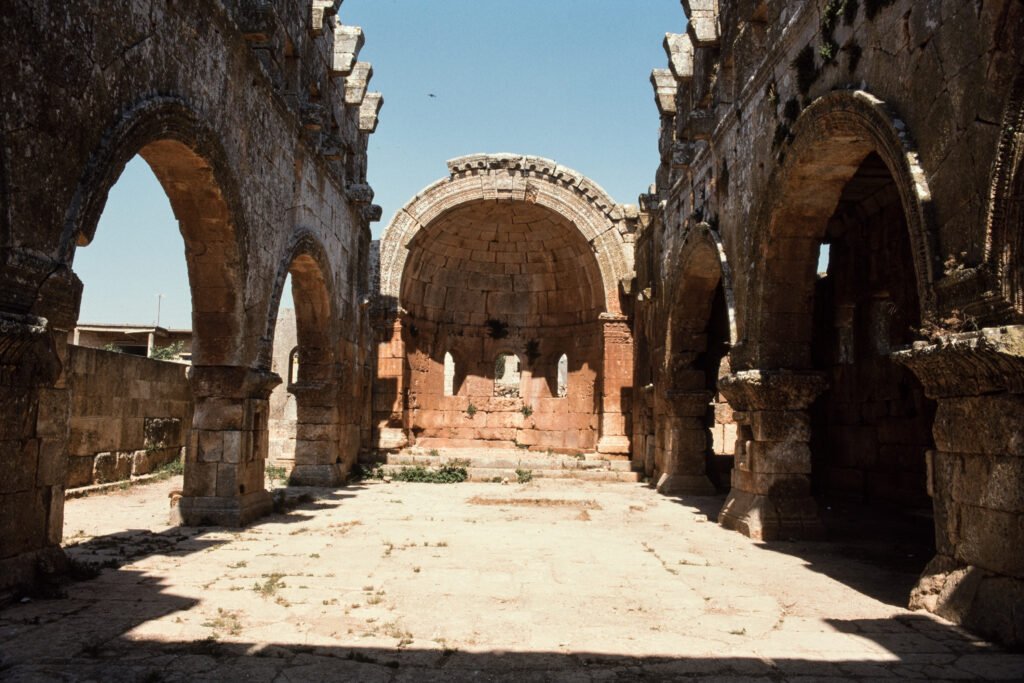
386–387 CE. Antioch. John Chrysostom—not yet Archbishop of Constantinople, still a priest in his home city—delivers a series of eight homilies to his congregation. Their subject is what he calls Judaizing: the practice of Christians attending synagogue, observing Jewish festivals, seeking healing from Jewish practitioners, or otherwise maintaining active participation in Jewish religious life. The homilies are known collectively, in Latin, as the Adversus Judaeos—Against the Jews.
They are among the most ferocious documents in the history of anti-Jewish rhetoric. Not until Martin Luther’s On the Jews and Their Lies, (Von den Jüden und iren Lügen, 1543) will anything in the Christian tradition approach their venom. Chrysostom’s language is volcanic: synagogues are brothels and dens of thieves, dwelling places of demons, fit only for burning. The Jewish soul is the habitation of the devil. The Jewish people, having rejected Christ and murdered the prophets, are fit for slaughter. These are not the measured arguments of a systematic theologian. They are sermons—oral performances, delivered to a live congregation, designed to produce visceral revulsion in the people sitting in the pews.
Understanding why Chrysostom delivered these homilies is as important as understanding what he said. He preached them because he had to. Christians in Antioch in 386 CE were not merely visiting the synagogue out of curiosity. They were actively participating in Jewish religious life alongside their Christian identity—observing Yom Kippur, celebrating the Feast of Trumpets, keeping the Sabbath, seeking out Jewish healers and teachers, presenting themselves for Jewish blessings and prayers. The pattern was not incidental or marginal. It was sufficiently widespread, and sufficiently alarming to Chrysostom, to demand eight consecutive homilies in response. His congregants were not spectators at a foreign tradition. They were participants in two religious communities simultaneously—something closer to what we might now call dual practice than to mere tourism.
More than sixty years after Nicaea—with Christianity now the empire’s official and exclusive religion, with the Theodosian legal architecture being constructed around them—Chrysostom’s congregation was not behaving as though the competition was over. Because at street level, it wasn’t.
Judaism remained a living tradition with deep roots, ancient prestige, and genuine appeal. The God-fearers—Gentiles drawn to Jewish practice without formally converting—had been a documented social category for centuries. The synagogue across the street from Chrysostom’s church was not an empty monument to a superseded religion. It was a functioning community whose liturgy, whose calendar, whose teachers, and whose healing practices were compelling enough that baptized Christians were organizing their lives around them alongside their Christian commitments.
Chrysostom’s homilies are the sound of institutional power meeting the stubborn complexity of lived human religious experience—and losing its composure. They are not the expression of confident triumph. They are the expression of anxious enforcement. The law can prohibit behavior. It cannot prohibit attraction.
Doctrine travels through books. Contempt travels through bodies.
The Adversus Judaeos is designed not to argue but to disgust, to make Jewish practice feel contaminating at a level below rational engagement, to encode revulsion into the emotional register of ordinary Christians who will pass it to their children not as legal principle but as feeling. The Codex Theodosianus encodes the contempt into law. The homilies encode it into the imagination. Both are transmission mechanisms. The legal architecture will survive the fall of Rome. The emotional register Chrysostom helped create will survive longer still.
The Shape of What Remains
Before the Western Roman Empire collapsed, the distinction between empire and Church had become, in the lived experience of its subjects, nearly impossible to navigate. Theodosius had made them structurally inseparable in ways that mattered for ordinary life: imperial law was Christian law, the emperor convened Church councils and enforced their decisions, bishops wielded civic authority, heresy was a crime against the state.
There were still genuine tensions between emperors and bishops—Ambrose of Milan barring Theodosius from communion after the Thessalonica massacre of 390 CE, in which imperial troops killed approximately 7,000 people in the circus, and compelling the emperor to appear at the cathedral in Milan in penitent’s clothing, without his imperial insignia, to perform public penance before being readmitted, demonstrates that the two jurisdictions were not identical and that episcopal authority could compel imperial submission.
But for the Jewish community living inside this apparatus, those internal negotiations were beside the point. There was no neutral authority to appeal to, no separate institution to seek protection from. The same apparatus that defined orthodox Christian belief also defined Jewish legal status—and it defined that status as subordinate, degraded, and theologically condemned.
The Western Roman Empire’s political structure fails in 476 CE—though the process is more gradual than any single year can capture. What collapses is the political machinery. The administrative architecture survives, carried forward in the only institution that has the organizational reach, the literate administrative class, the communication networks, and the hierarchical structure capable of holding civilization together across the former empire’s territory.
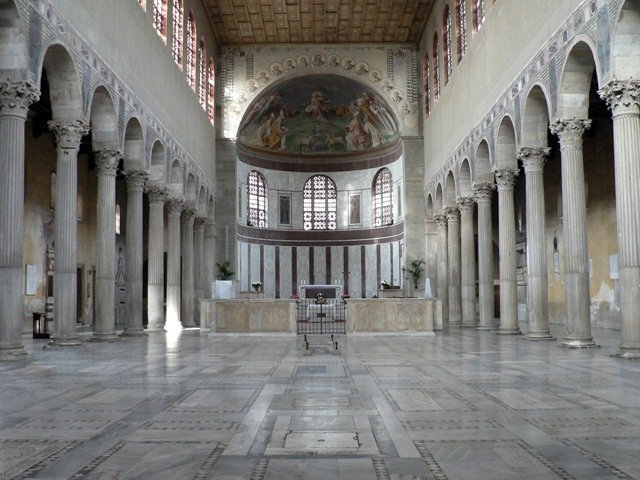
The Church steps into the vacuum. Not because it planned to, but because it is the only institution shaped correctly to fill it. The diocese mirrors the Roman administrative district. The bishop maps onto the provincial governor. The hierarchy from parish priest to bishop to archbishop to pope echoes the Roman chain of command. Canon law is Roman law adapted to ecclesiastical purposes. The basilica—the rectangular hall with an apse where the bishop presides—was a Roman civic building type before it was a Christian one.
The Church does not simply preserve what Rome built. It adapts Roman administrative forms to a theological project, Roman legal habits to canon law, Roman hierarchical structures to ecclesiastical ones. Transmission is never mere preservation. It is preservation through transformation—which is precisely what makes it so durable. What the Church transmits is not Roman imperial administration unchanged. It is Roman imperial administration reorganized around a theological vision that includes, as one of its settled conclusions, a fully formed account of what Jews are, what their continuing existence signifies, and what the Christian community’s relationship to them must be.
The empire that categorized, taxed, excluded, and theologically condemned the Jewish community does not disappear when its political structure fails. It transforms—and in transforming, transmits everything it has built into the institution that will govern Western civilization for the next thousand years.
The vessel changes. What it carries does not.

Discover more from Many Lamps, One Flame
Subscribe to get the latest posts sent to your email.