
Skip to content
newlogo t
  • Home
  • Reflections
  • Influences
  • Podcast
  • Thematic Guide
  • About
  • Calendar
Search
newlogo t
  • Home
  • Reflections
  • Influences
  • Podcast
  • Thematic Guide
  • About
  • Calendar

Parashat Devarim

Leave a Comment / From the Scroll / Eliyahu (נר הדרשן)

Four books run on one formula: G-d spoke to Moses, saying. Devarim drops it—these are the words that Moses spoke—and never picks it up. The Talmud registers the strain in a phrase: mipi atzmo, from his own mouth. Something had to happen to a man before that was possible.

Parashat Devarim Read More »

The First Accusations

Leave a Comment / Divergence / Eliyahu (נר הדרשן)

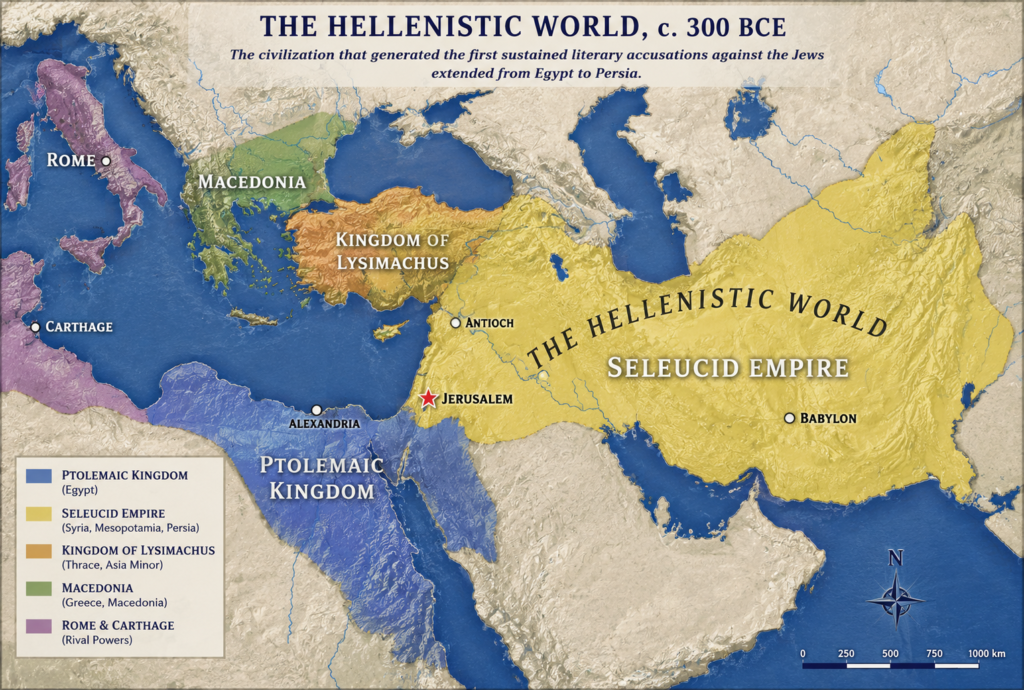
Manetho’s history of Egypt does not survive. We have his account of the Exodus—the Hebrews as a quarantined colony of lepers, expelled as a sanitation measure—only because Josephus quoted it at length in order to refute it. The refutation became the preservation.

The First Accusations Read More »

The Redeemer’s Field

Leave a Comment / Under the Lectionary / Eliyahu (נר הדרשן)

The conventional reading is not wrong as far as it goes: the Kingdom is of supreme value, worth any sacrifice to obtain. The Church Fathers read it that way and modern scholarship largely agrees. But the man who finds the treasure hides it again before buying the field, and the Greek complicates what looked settled.

The Redeemer’s Field Read More »

Parashat Masei

Leave a Comment / From the Scroll / Eliyahu (נר הדרשן)

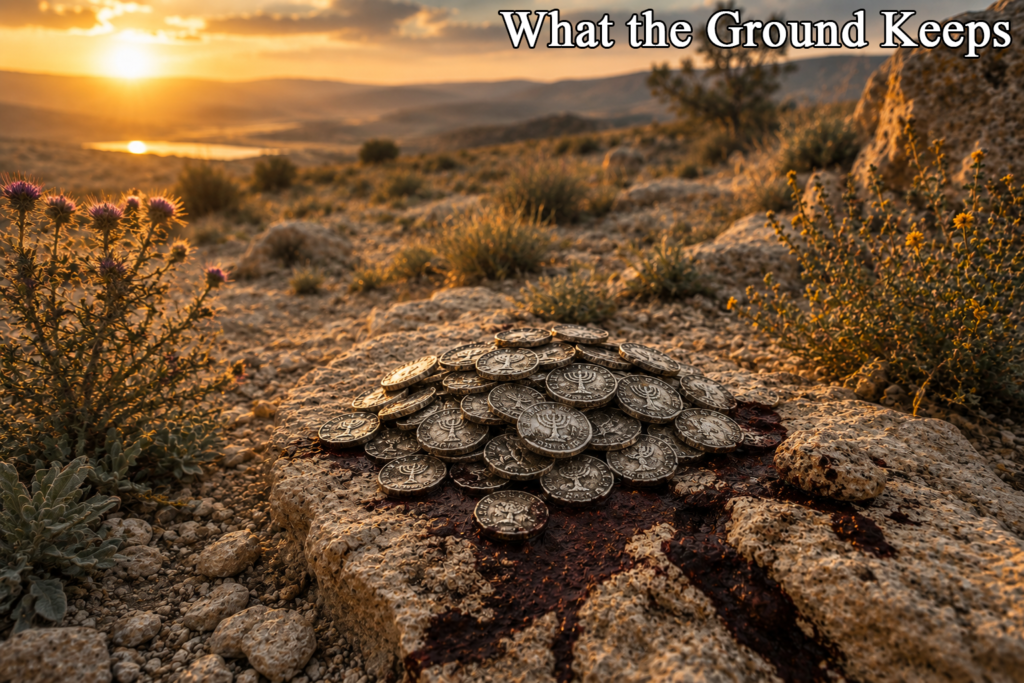
Almost everything in Torah can be bought back. The firstborn son, the ancestral field, the beast set aside for the altar, a man’s own assessed worth—loss turned again into possession by the right payment. Near the end of Numbers, in the laws of the manslayer, Torah names the one thing that cannot.

Parashat Masei Read More »

Parashat Matot

1 Comment / From the Scroll / Eliyahu (נר הדרשן)

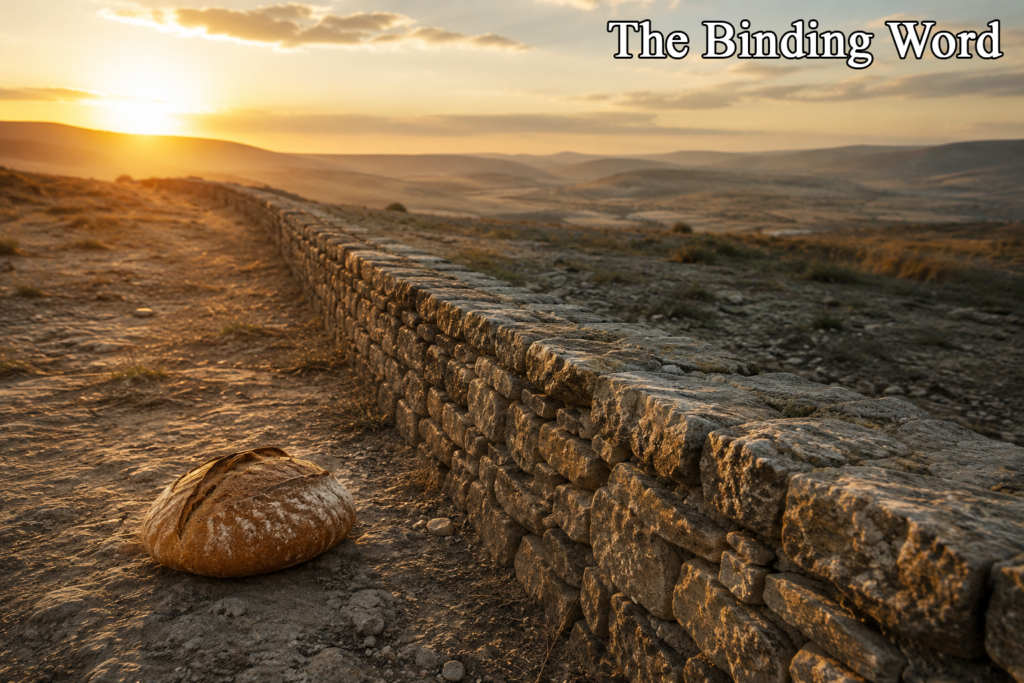
A man says a few words, and something exists that did not exist a moment earlier. Not a feeling, not an intention—an obligation, with edges. The bread is the same bread, and a wall now stands where there was none. He may regret it within the hour. The wall does not care.

Parashat Matot Read More »

The Vow and the Village

Leave a Comment / Divergence / Eliyahu (נר הדרשן)

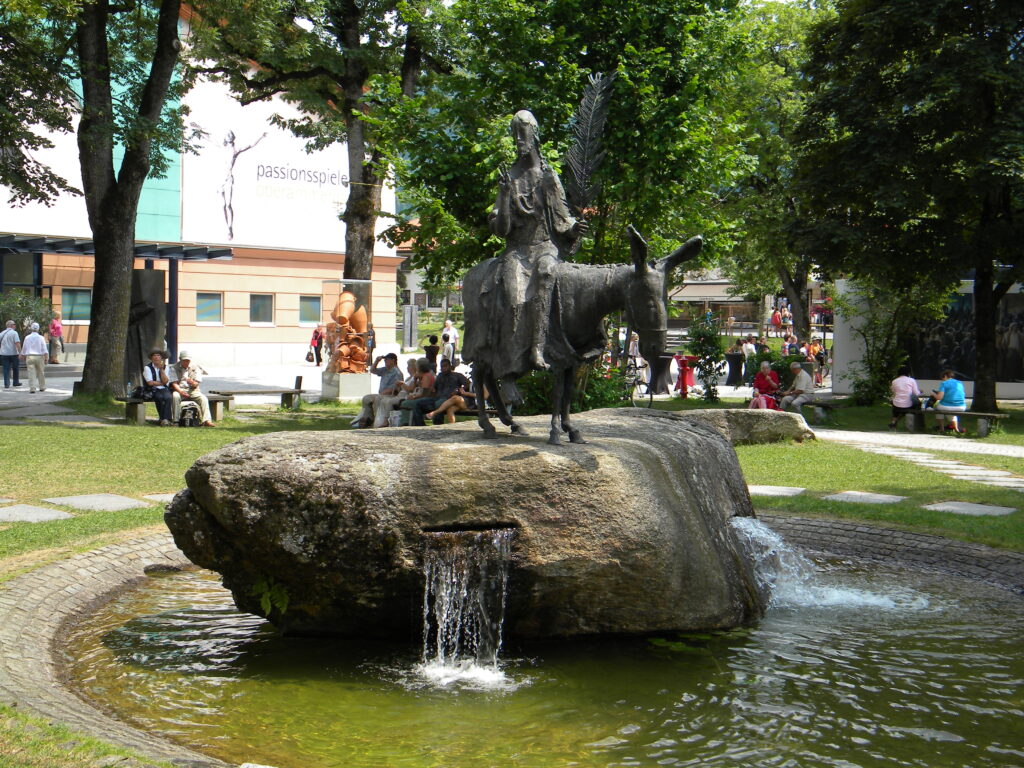
In 1633 a Bavarian village promised to perform the Passion every ten years if the plague passed them by. It passed. They have kept the vow for nearly four hundred years. Rome repudiated the charge of collective Jewish guilt in 1965. The Oberammergau script was not substantially reformed until 1990.

The Vow and the Village Read More »

The Sower, the Tares, and the Enemy’s Seed

Leave a Comment / Under the Lectionary / Eliyahu (נר הדרשן)

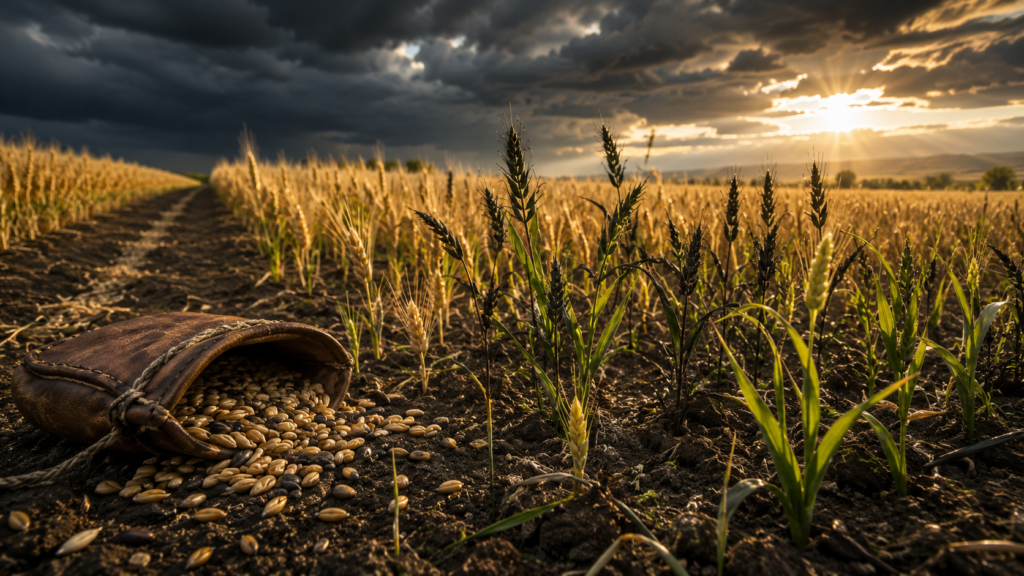
A crowd gathers expecting revelation. Instead of explanation, he begins talking about dirt. The mashal does not tell the listener what kind of soil he is. It engineers the conditions under which he discovers it himself—and the ground, it turns out, has more than one kind of enemy.

The Sower, the Tares, and the Enemy’s Seed Read More »

Parashat Pinchas

Leave a Comment / From the Scroll / Eliyahu (נר הדרשן)

One letter in the entire Torah must be written broken. The vav in the shalom of Pinchas’s covenant of peace carries a mandatory fracture—anywhere else in a scroll it would invalidate the whole thing. The usual reading is that peace won through violence is incomplete. That reading is not wrong, and it stops early.

Parashat Pinchas Read More »

The Quorum and the Congregation

1 Comment / Reflections in the Well / Eliyahu (נר הדרשן)

You cannot say Kaddish alone. Not preferably-with-others—the prayer simply does not happen. Nine of the greatest saints in history, without a tenth, cannot say it. A tenth man who has not prayed in forty years makes it possible. G-d does not count holiness. G-d counts heads.

The Quorum and the Congregation Read More »

The Weed, The Kitchen, and The Sleeping Farmer

Leave a Comment / Under the Lectionary / Eliyahu (נר הדרשן)

Three parables in one teaching session by the sea, and in each the argument is not the one the audience expects. They are waiting for the cedar—the tree of empire, the image of a kingdom that announces itself. They are going to get a weed, a woman’s kitchen, and a farmer who sleeps through it.

The Weed, The Kitchen, and The Sleeping Farmer Read More »

← Previous 1 … 3 4 5 … 14 Next →

About James Nerlinger

My spiritual path has been anything but linear. I began life in the Catholic tradition, but quickly grew curious about the many ways human beings have sought truth. That curiosity led me through the world’s great religions and philosophies, tracing their influence on cultures, history, and the human imagination. For a time, I became a devoted spiritualist, until I set those studies aside to live more fully in the world of man—only to find that world unsatisfying, and the deeper questions still calling me back.

I write under the name Eliyahu (נר הדרשן)—“Lamp of the Interpreter”—a reflection of my commitment to bridging traditions and illuminating sacred text through close reading, contemplative practice, and interfaith dialogue.

Today, my journey continues with a focus on Judaism, Torah, and Kabbalah, while remaining open to wisdom wherever it is found. Along the way, I’ve wrestled with Aristotle and Plato, listened to Solzhenitsyn and Nietzsche, studied the Zohar and the Rambam, and reflected on insights from Asian sages whose words still echo across centuries.

Many Lamps, One Flame is a place to share that ongoing exploration—a meeting ground for traditions, philosophies, and seekers. Not to offer final answers, but to kindle sparks: reflections meant to remind us that though the lamps may differ, the flame at their heart is the same.

Contact

Thoughts?  Comments?  Discussion?

eliyahu@manylampsoneflame.com

Buy Me a Coffee

Email

Copyright © 2026 Many Lamps, One Flame