Skip to content
newlogo t
  • Home
  • Reflections
  • Influences
  • Podcast
  • Thematic Guide
  • About
  • Calendar
Search
newlogo t
  • Home
  • Reflections
  • Influences
  • Podcast
  • Thematic Guide
  • About
  • Calendar

What the Silence Held

Leave a Comment / Under the Lectionary / Eliyahu (נר הדרשן)

They come to finish what Shabbat interrupted—not to witness a miracle but to tend a body. They bring spices. On the way they ask each other who will roll the stone back for them. That question is in the text. They are not expecting what they find.

What the Silence Held Read More »
The Weight of the Wood

Leave a Comment / Under the Lectionary / Eliyahu (נר הדרשן)

The Greek word is stauros—an upright stake, or a cross structure more broadly; the shape is not specified. In 1968, construction workers in Jerusalem uncovered an ossuary holding the bones of a man named Yehohanan, an iron nail still driven through his right heel. His arms appear to have been tied, not nailed.

The Weight of the Wood Read More »

Thirty Weights of Silver

Leave a Comment / Under the Lectionary / Eliyahu (נר הדרשן)

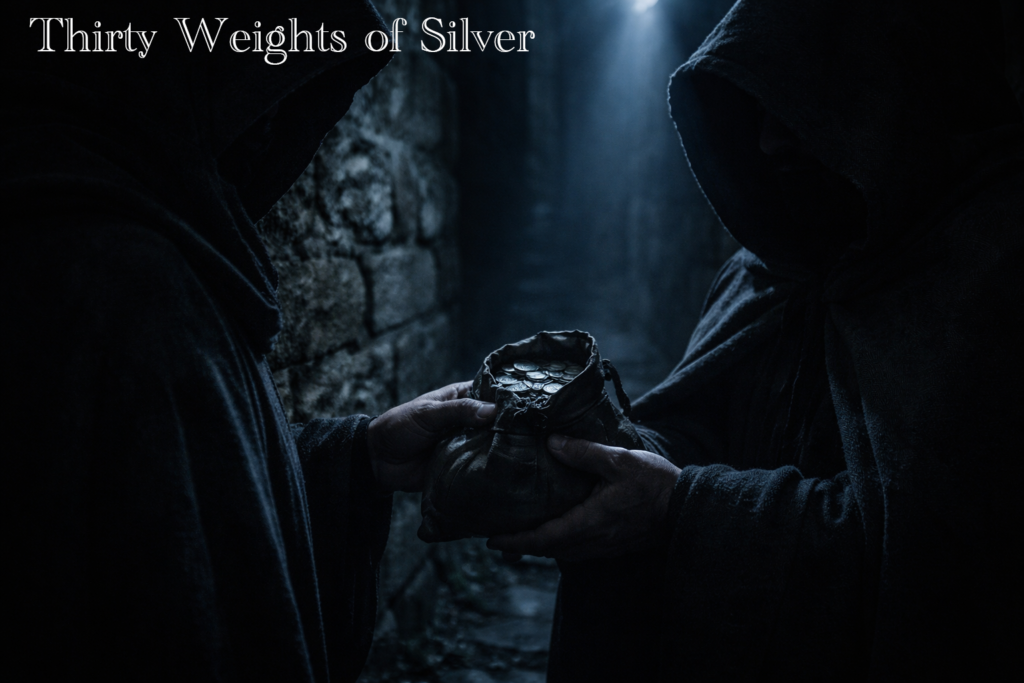
Zechariah names thirty pieces of silver as the wage a dismissed shepherd receives—so insulting that G-d tells the prophet to throw it to the potter. Exodus names it as the compensation owed when a slave is gored by an ox. Thirty is what something is worth when it is worth very little.

Thirty Weights of Silver Read More »

The Blood and the Cup

Leave a Comment / Under the Lectionary / Eliyahu (נר הדרשן)

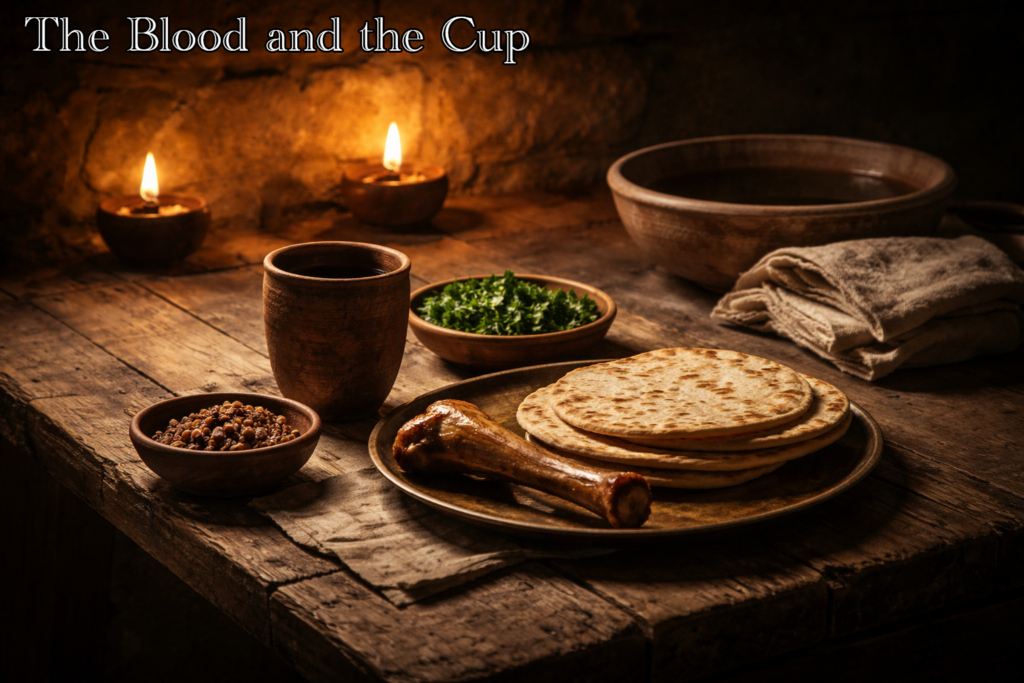
Before a single word of the supper is spoken, the teacher rises from the table, removes his outer garment, ties a towel around his waist, and begins washing his students’ feet. No one in that room misreads the gesture. A master does not do this. The inversion is the theological statement.

The Blood and the Cup Read More »

Parashat Shemini

Leave a Comment / From the Scroll / Eliyahu (נר הדרשן)

Two words in the Hebrew: vayidom Aharon. And Aaron was silent. The verb does not mean quiet—it means motion that has come to rest. His sons brought fire that had not been commanded and were consumed by it, and the tradition has never agreed on what exactly was wrong with the fire.

Parashat Shemini Read More »

The World in a Bubble

Leave a Comment / Reflections in the Well / Eliyahu (נר הדרשן)

A niece sent an image—one of those collectible display bubbles, a signed baseball suspended inside—and asked whether existence might be something like that. It is not a naive question. It is one of the oldest questions in serious theology, usually asked in considerably more complicated language.

The World in a Bubble Read More »

Treasures and Masters

Leave a Comment / Under the Lectionary / Eliyahu (נר הדרשן)

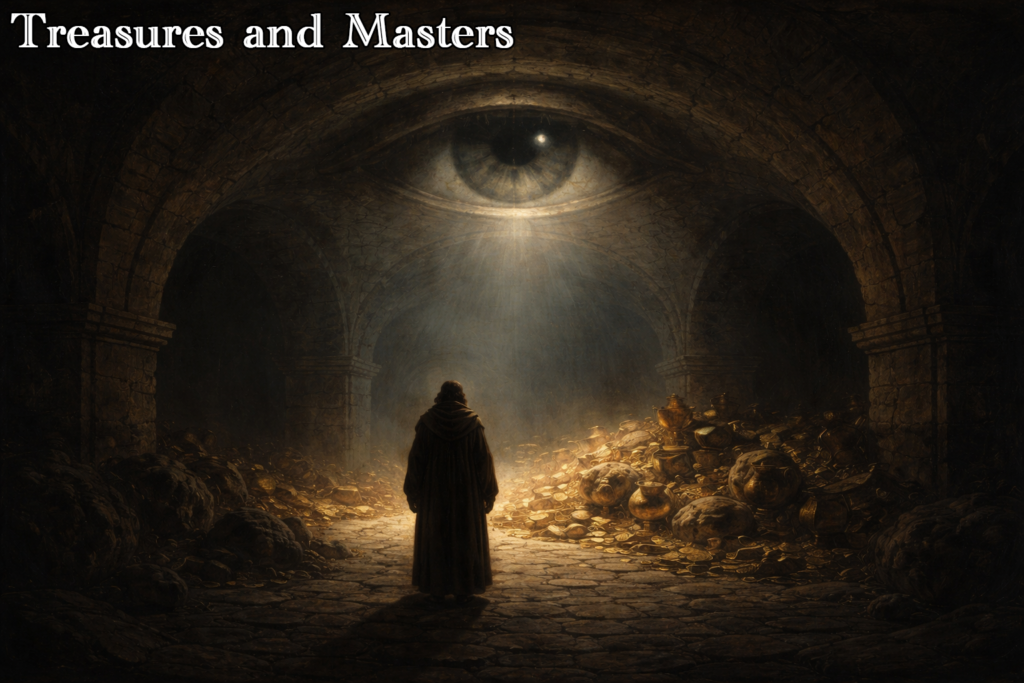
The eye is the lamp of the body—but an instrument of perception can be miscalibrated, and the passage says plainly what happens then. If the light in you is darkness, how great is that darkness. The treasures moth and rust destroy are not only kept in vaults. Some are kept in the inner room.

Treasures and Masters Read More »

Parashat Tzav

Leave a Comment / From the Scroll / Eliyahu (נר הדרשן)

You do not notice a fire going out. In stories, fires are extinguished—by wind, by water, by some decisive act. In life they die for a simpler reason: no one brought wood. The command that the altar fire never go out is inseparable from the one that follows it.

Parashat Tzav Read More »

The Unasked Question

Leave a Comment / Reflections in the Well / Eliyahu (נר הדרשן)

A friend could not stop turning over a question: what is the question for which my life is the answer? It has the shape of a riddle and the weight of something considerably more serious. The first useful move was not to answer it, but to notice where it was pointing.

The Unasked Question Read More »

Fasting and Authentic Devotion

Leave a Comment / Under the Lectionary / Eliyahu (נר הדרשן)

By the time he reaches these three verses he has already said the essential thing twice, and the Greek verdict has been identical each time—apechousin, receipt given, account settled. Tzedakah, tefillah, ta’anit. Three central disciplines, one mechanism that hollows all of them out.

Fasting and Authentic Devotion Read More »

← Previous 1 … 8 9 10 … 14 Next →

About James Nerlinger

My spiritual path has been anything but linear. I began life in the Catholic tradition, but quickly grew curious about the many ways human beings have sought truth. That curiosity led me through the world’s great religions and philosophies, tracing their influence on cultures, history, and the human imagination. For a time, I became a devoted spiritualist, until I set those studies aside to live more fully in the world of man—only to find that world unsatisfying, and the deeper questions still calling me back.

I write under the name Eliyahu (נר הדרשן)—“Lamp of the Interpreter”—a reflection of my commitment to bridging traditions and illuminating sacred text through close reading, contemplative practice, and interfaith dialogue.

Today, my journey continues with a focus on Judaism, Torah, and Kabbalah, while remaining open to wisdom wherever it is found. Along the way, I’ve wrestled with Aristotle and Plato, listened to Solzhenitsyn and Nietzsche, studied the Zohar and the Rambam, and reflected on insights from Asian sages whose words still echo across centuries.

Many Lamps, One Flame is a place to share that ongoing exploration—a meeting ground for traditions, philosophies, and seekers. Not to offer final answers, but to kindle sparks: reflections meant to remind us that though the lamps may differ, the flame at their heart is the same.

Contact

Thoughts?  Comments?  Discussion?

eliyahu@manylampsoneflame.com

Buy Me a Coffee

Email

Copyright © 2026 Many Lamps, One Flame